
Buying guide
Best waterproof solar lights for your garden: 7 weather-rated picks
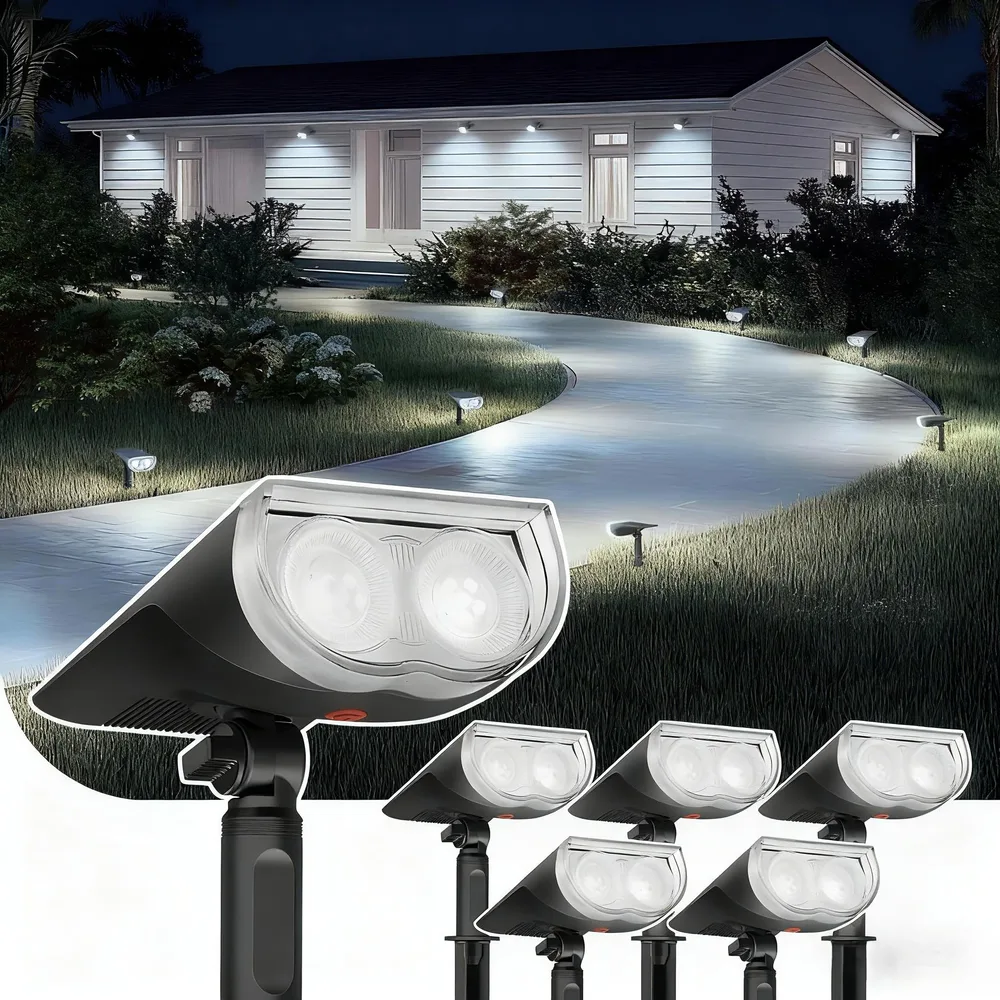
Linkind's StarRayS SP002 is the best weather-focused starting point in this pool because it has a documented IP67 rating, adjustable ground or wall placement, and stated low and high runtimes. IP ratings describe ingress protection, so this guide does not promise any light is waterproof.
Quick answer
Start with the Linkind StarRayS Solar Spotlight SP002 if weather exposure is the main concern. Linkind documents IP67, describes short-term submersion, and lists 350 lm with up to 12 hours on low and 6 hours on high. The head and panel adjust, and the light can use a ground stake or wall mount.
The word “waterproof” needs care here. The locked records provide IP codes and manufacturer weather wording, not a promise for every storm or submersion. She Gardens did not test water resistance, runtime, or durability. Check the current manual and place each panel in usable daylight.
| Rank | Product | Documented weather detail | Main drawback |
|---|---|---|---|
| 1 | Linkind StarRayS Solar Spotlight SP002 | IP67 and short-term submersion wording | 350 lm output |
| 2 | Linkind Color-Changing Solar Spotlight SP004 | IP67 and short-term submersion wording | Runtime is not disclosed |
| 3 | Linkind Smart Solar Spotlight SL5C | IP67 and short-term submersion wording | 150 lm output |
| 4 | Linkind Smart Solar Spotlight SL6C | IP66 and manufacturer storm-proof wording | Runtime is not disclosed |
| 5 | Linkind StarRay Solar Spotlight SP001U | IP65 and drizzle-proof wording | Battery capacity is not disclosed |
| 6 | Nanoleaf Solar Garden Lights 2-Pack | IP65 and outdoor range stated | Estimated 4 to 8 hour runtime |
| 7 | Govee Outdoor Solar String Lights H3001 | IP67 and panel temperature range | 13-hour claim is at 10 lm |
The seven weather-rated picks
1. Linkind StarRayS SP002
The Linkind SP002 manufacturer page documents IP67 and uses short-term submersion wording. It does not define the duration or conditions, so that is the full weather claim used here. The spotlight has 350 lm, with manufacturer-stated runtimes of 12 hours on low and 6 hours on high.
The panel and head adjust 180 degrees horizontally and 90 degrees vertically. Ground-stake or wall-mount placement lets you keep the panel in a better charging position than the light itself when a garden feature creates shade. Battery chemistry and capacity are not disclosed.
Check the Linkind StarRayS SP002
Pros: Highest rank for weather-focused use, adjustable placement, and two setting runtimes. Cons: Lower output than SP004, with limited submersion detail.
2. Linkind Color-Changing SP004
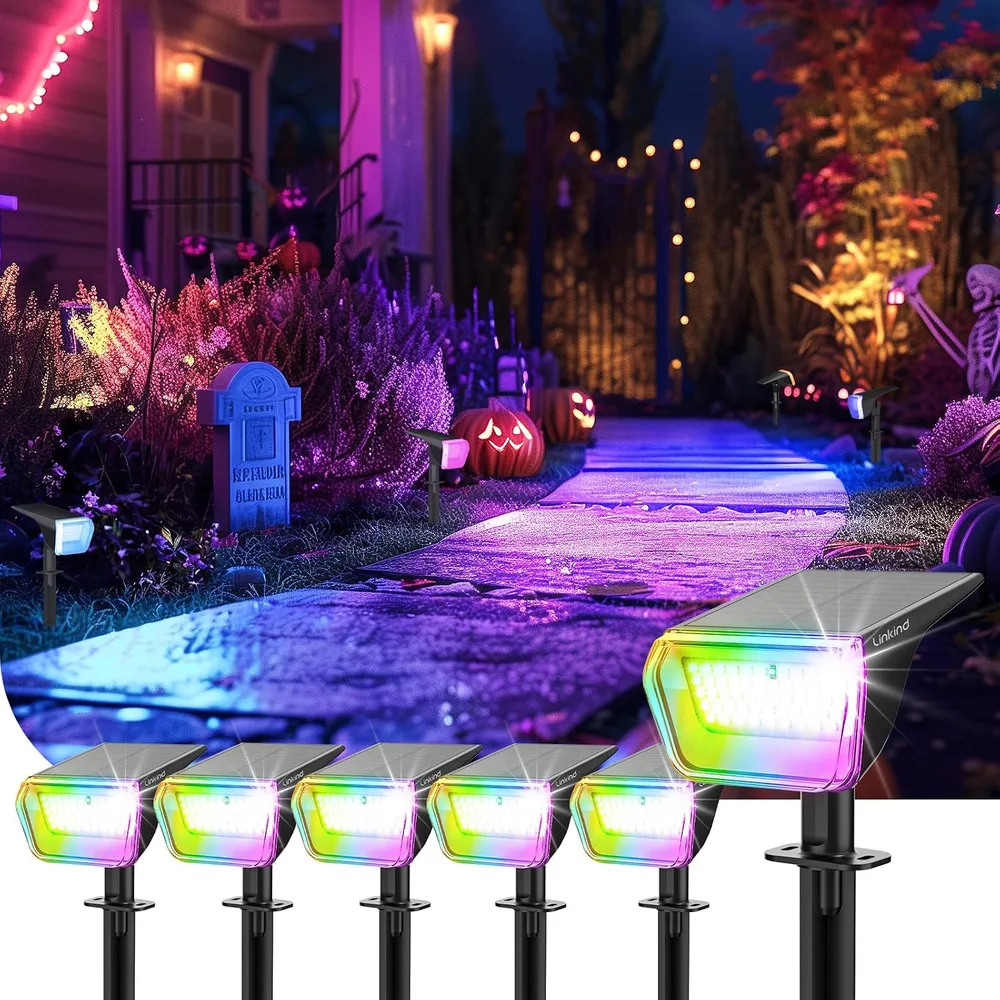
The Linkind SP004 pairs IP67 with the manufacturer’s short-term submersion description. The source does not define how long or under what conditions, so the rating stays in that narrow frame. Its 800 lm output and 110-degree beam make it the brightest pick in this article, and RGB or white modes give the light a different role after dark.
SP004 mounts on the ground or a wall. The reviewed page lists a 3.7 V / 1.2 W solar system but does not disclose runtime, battery chemistry, or capacity. Place the panel where it can charge, then treat the weather code and output as separate facts.
Pros: IP67, 800 lm, and color or white modes. Cons: The reviewed page gives no runtime or battery capacity.
3. Linkind Smart Solar Spotlight SL5C
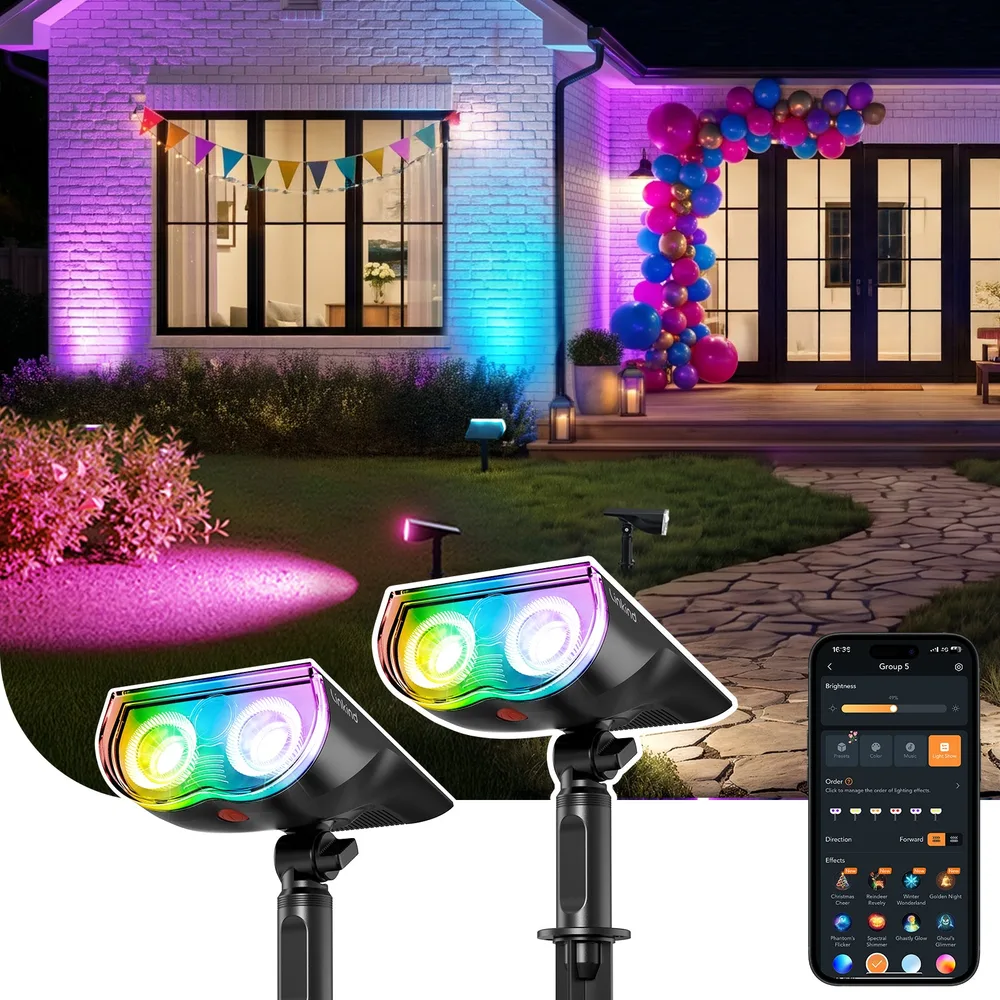
The Linkind SL5C has an IP67 rating and the same manufacturer short-term submersion wording as the other Linkind models in this list. Its 150 lm output is lower, but Linkind gives a runtime claim of up to 14 hours. The light uses a 3.7 V / 1.55 W solar system with MPPT, plus app and voice controls.
Use the ground stake or wall mount to aim an accent at a bed, fence, or small feature. The reviewed page does not state temperature limits, battery chemistry, or capacity. The weather rating does not make the missing details disappear.
Pros: IP67, stated up-to-14-hour runtime, and smart controls. Cons: 150 lm is a low output for a feature spotlight.
4. Linkind Smart Solar Spotlight SL6C
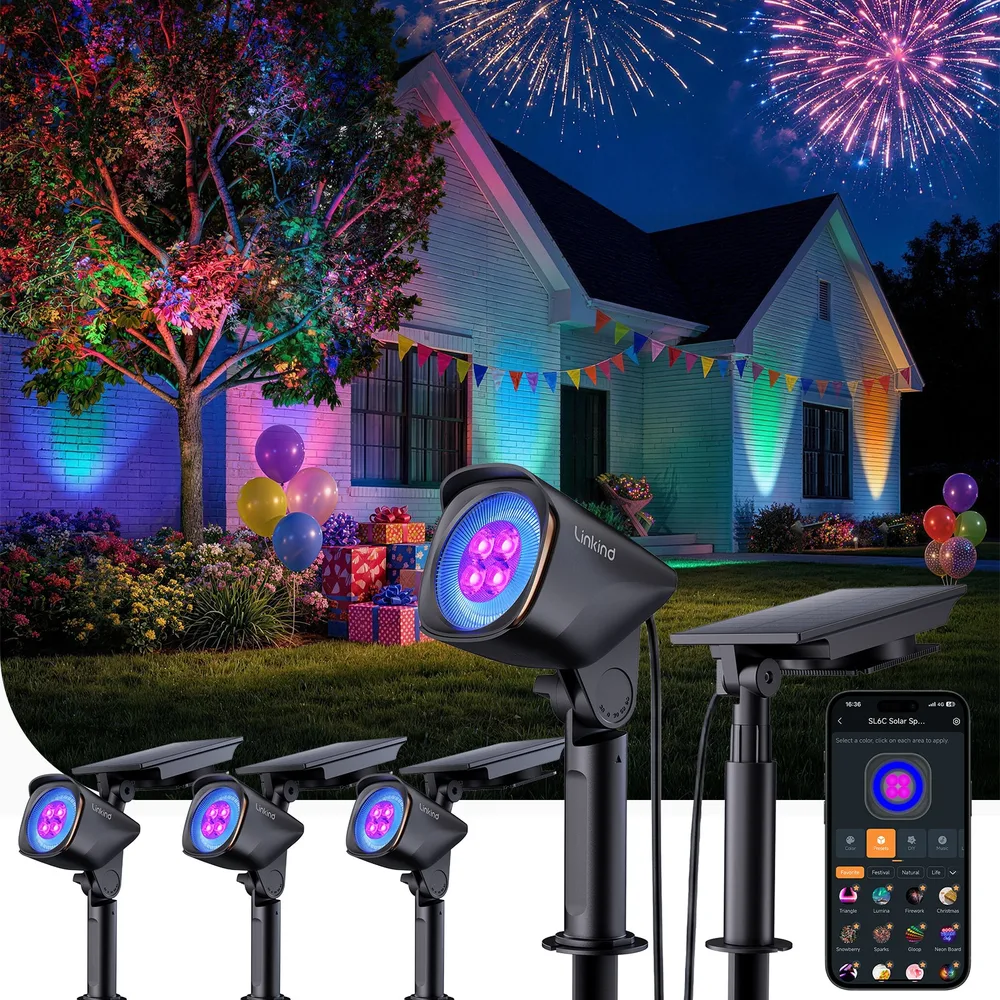
The Linkind SL6C is rated IP66, and the manufacturer calls it storm-proof. That phrase is retained as a manufacturer statement, not expanded into a promise about every weather event. The light is rated at 200 lm and can use a ground stake or wall mount.
Its 3.7 V / 2 W solar system also has documented USB charging. App and voice controls add flexibility when the light is part of a smart garden setup. Runtime, battery chemistry, and battery capacity are not disclosed on the reviewed page.
Pros: IP66, USB charging, and wall or ground mounting. Cons: No stated runtime and lower output than the first two spots.
5. Linkind StarRay SP001U
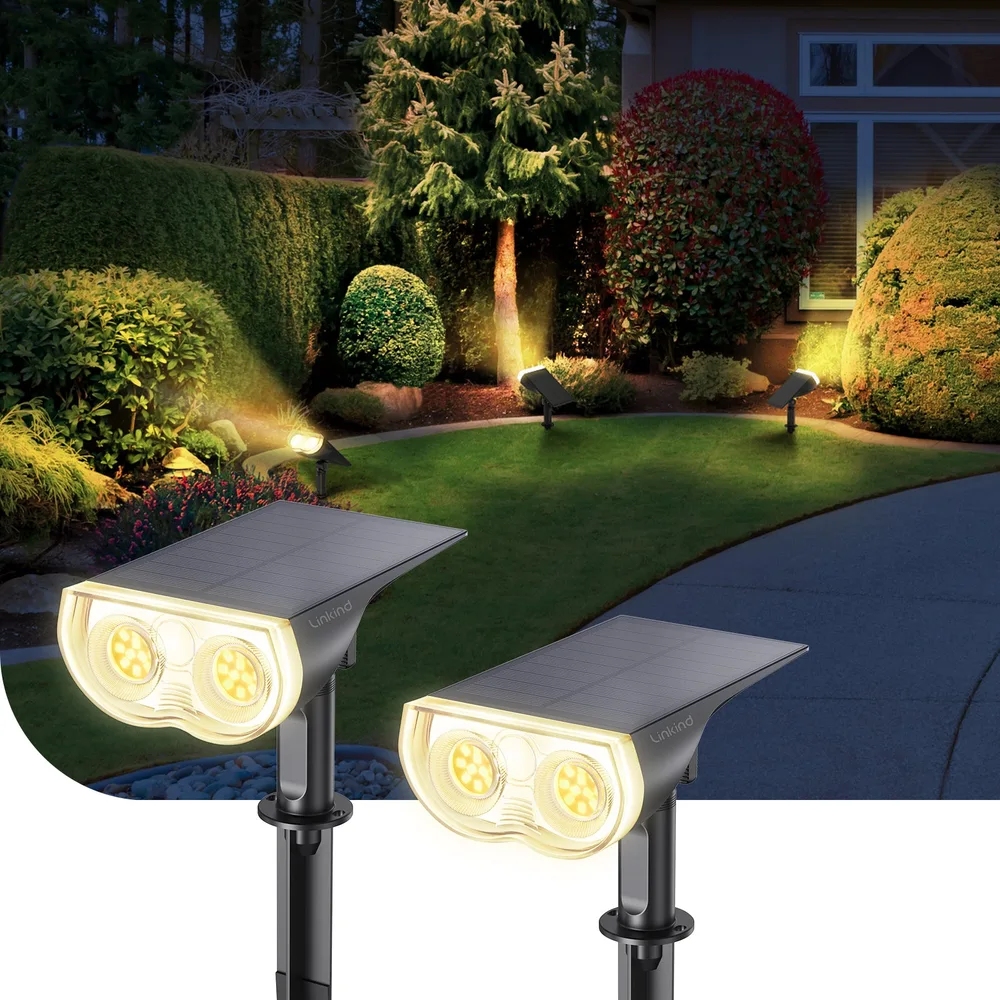
The Linkind SP001U has an IP65 rating and Linkind’s “drizzle-proof” wording. The source does not establish submersion tolerance. Weather is not its only useful field: Linkind lists 650 lm, an adjustable head, and 24, 12, and 6 hour runtimes on low, medium, and high.
The solar panel adjusts 90 degrees vertically and 180 degrees horizontally. You can stake the light or mount it on a wall. Battery chemistry and capacity are not disclosed, so the runtime claims should stay attached to the named settings rather than become a prediction for every night.
Check the Linkind StarRay SP001U
Pros: 650 lm, complete setting-based runtime, and adjustable panel. Cons: IP65 ranks below the IP66 and IP67 options for this query.
6. Nanoleaf Solar Garden Lights
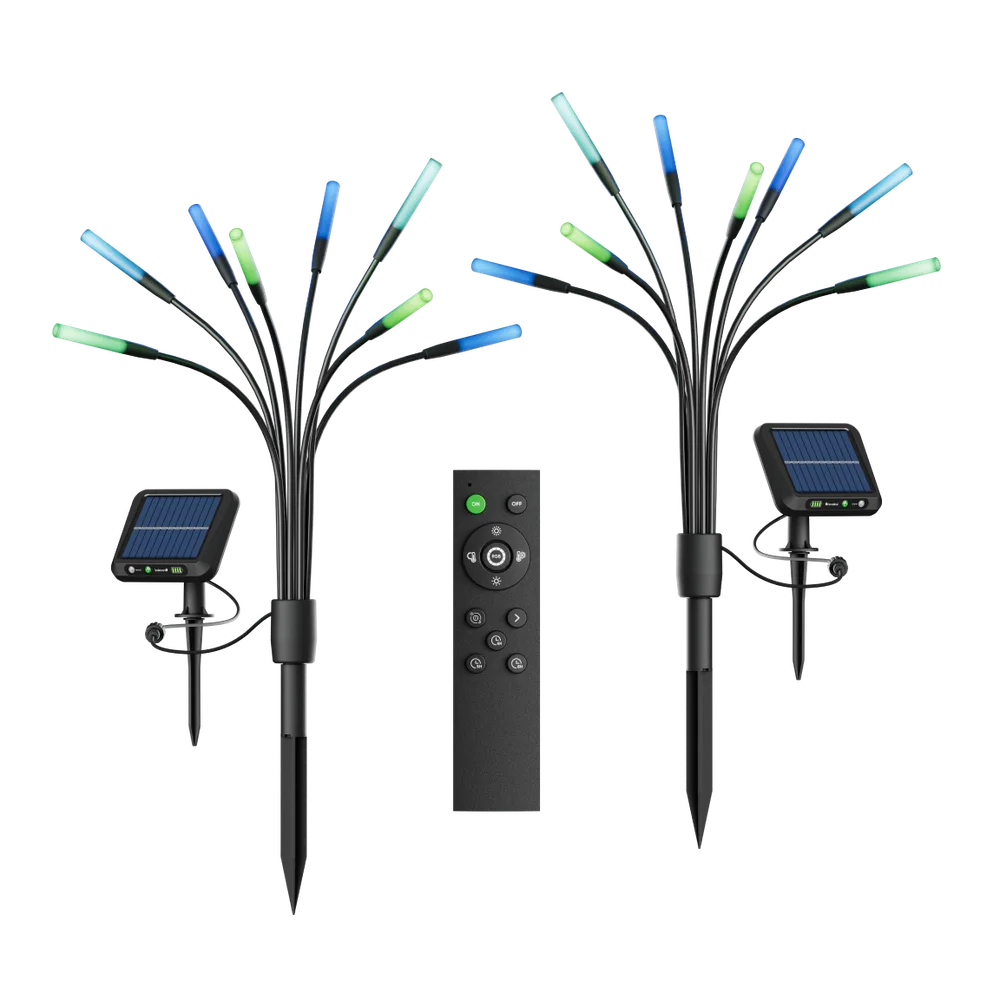
The Nanoleaf Solar Garden Lights have an IP65 rating and a listed outdoor operating range of -25 C to 45 C. Nanoleaf rates each light at 50 lm and gives an estimated 4 to 8 hour runtime. The product uses a 1,200 mAh 18650 lithium battery, solar charging, and USB-C backup charging.
The lights fit paths, flowerbeds, fences, and garden accents. Their lower output suits marking or decorating a spot more than lighting a wide area. IP65 is the documented rating, and the operating range is the full temperature detail in the locked record. Do not extend it to a different model or a different use.
Check the Nanoleaf Solar Garden Lights
Pros: IP65, a stated outdoor range, and USB-C backup charging. Cons: Lower output and an estimated rather than fixed runtime.
7. Govee H3001
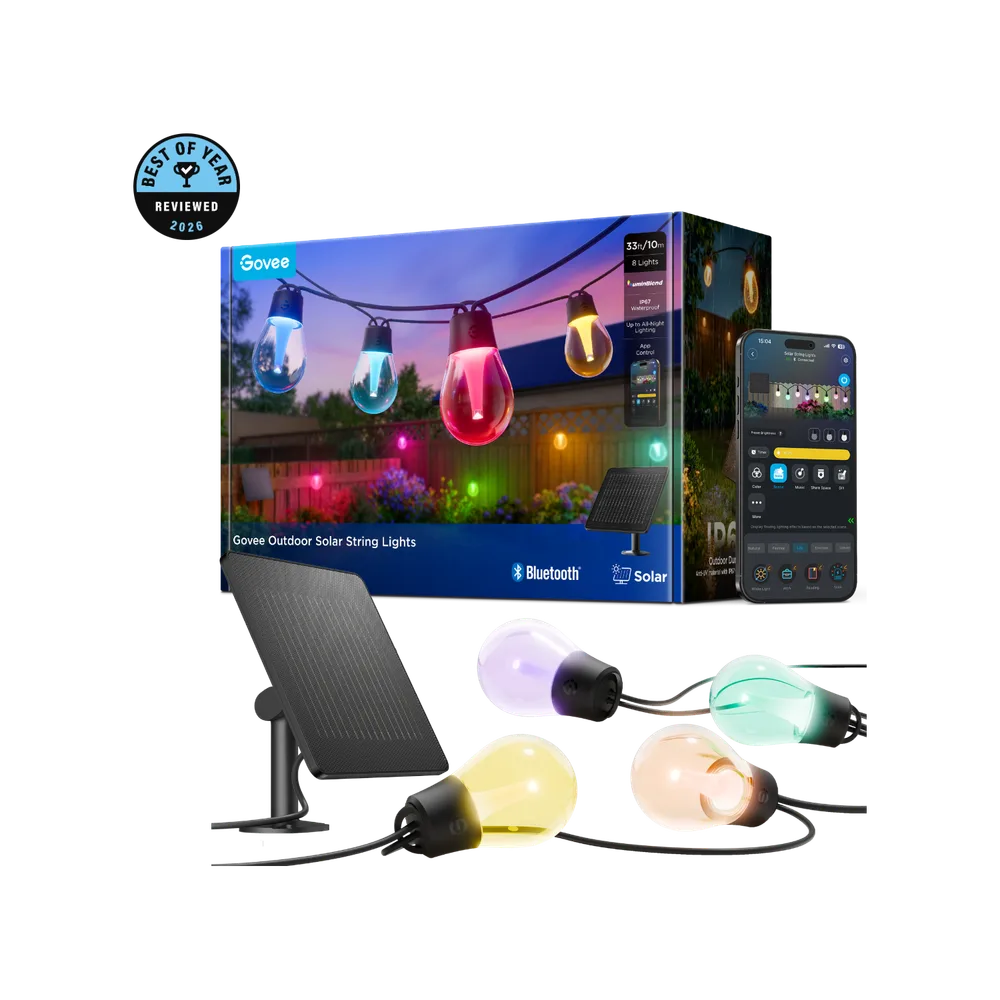
The Govee H3001 is the string-light option here. Govee lists IP67, a 6 W solar panel with an ETFE surface, and a panel temperature range of -4 F to 104 F. The lights reach up to 50 lm per bulb at full brightness, but the stated up-to-13-hour runtime is at 10 lm.
That brightness condition matters. The 13-hour figure is not a full-brightness promise. Govee says brightness and sun exposure change runtime, and the panel needs direct sun.
Pros: IP67, a documented panel temperature range, and clear brightness-dependent runtime. Cons: Full-brightness runtime is not stated, and direct sun is required for the panel.
How to read solar-light weather claims
An IP code is a useful comparison field, but it is not a complete installation plan. IP65, IP66, and IP67 appear in this pool. The source registry says to treat those as documented ingress ratings. Manufacturer phrases such as drizzle-proof, splash-proof, storm-proof, and short-term submersion should remain attached to the specific model and source wording.
The garden hose guide for cold weather covers a different outdoor product, but it shows why operating conditions deserve their own check. For these lights, the records give an operating range for Nanoleaf, a panel range for Govee, and charging or discharge limits for other models in the path-light pool. Do not borrow one product’s temperature detail for another. For larger layouts, see the large-garden hose guide.
Placement affects charging. A spotlight can point at a tree while its separate panel points toward open daylight. Govee’s panel needs direct sun, and its runtime changes with brightness and sun exposure. The locked research does not support one fixed runtime across every garden.
Before installation, confirm the current product page, package variant, mount, cable route, and charging instructions. Keep the panel clear enough to receive the light the manufacturer expects. A weather rating does not cover a damaged cable, an altered housing, or a mounting method the manual does not allow.
Frequently asked questions
Which solar garden light has the highest IP rating here?
SP002, SP004, SL5C, and Govee H3001 are listed at IP67. Their other specifications and formats differ, so the code alone does not choose between a spotlight and a string light.
Does IP67 mean a solar light is waterproof?
No. The locked source registry treats IP67 as an ingress rating. SP002, SP004, and SL5C also have manufacturer short-term submersion wording, but the reviewed pages do not define every duration or condition.
Can rain reduce solar-light runtime?
The locked records do not give one universal rain-runtime result. They tie some products to direct sun, brightness, or stated conditions. Plan around the model’s panel position and claim.
Which weather-rated light is brightest?
SP004 has the highest documented output at 800 lm. SP001U follows at 650 lm. Govee’s 50 lm per bulb is a string-light figure, so compare it within its own format.
Recommendation
Choose SP002 for the best weather-focused mix of IP67, adjustable placement, and setting-based runtime. Choose SP004 when 800 lm matters and runtime can be undisclosed. SL5C is the smart lower-output option, while Govee fits a weather-rated string. Keep waterproof as a search term, not a promise beyond the source record.
Sources and methodology
She Gardens used the locked solar-light shortlist and source registry researched on 29 August 2026. Product facts came from Linkind SP002, SP004, SL5C, SL6C, SP001U, Nanoleaf, and Govee. Category context came from Consumer Reports outdoor lighting. She Gardens did not test water resistance, runtime, or outdoor durability.