
Buying guide
Best Garden Hoses for Large Gardens: 7 Long-Reach Picks
Water Right's 600 Series is the best starting point when a large garden needs reach and flow. ELEY costs more, but its long polyurethane hose is easier to drag and store.
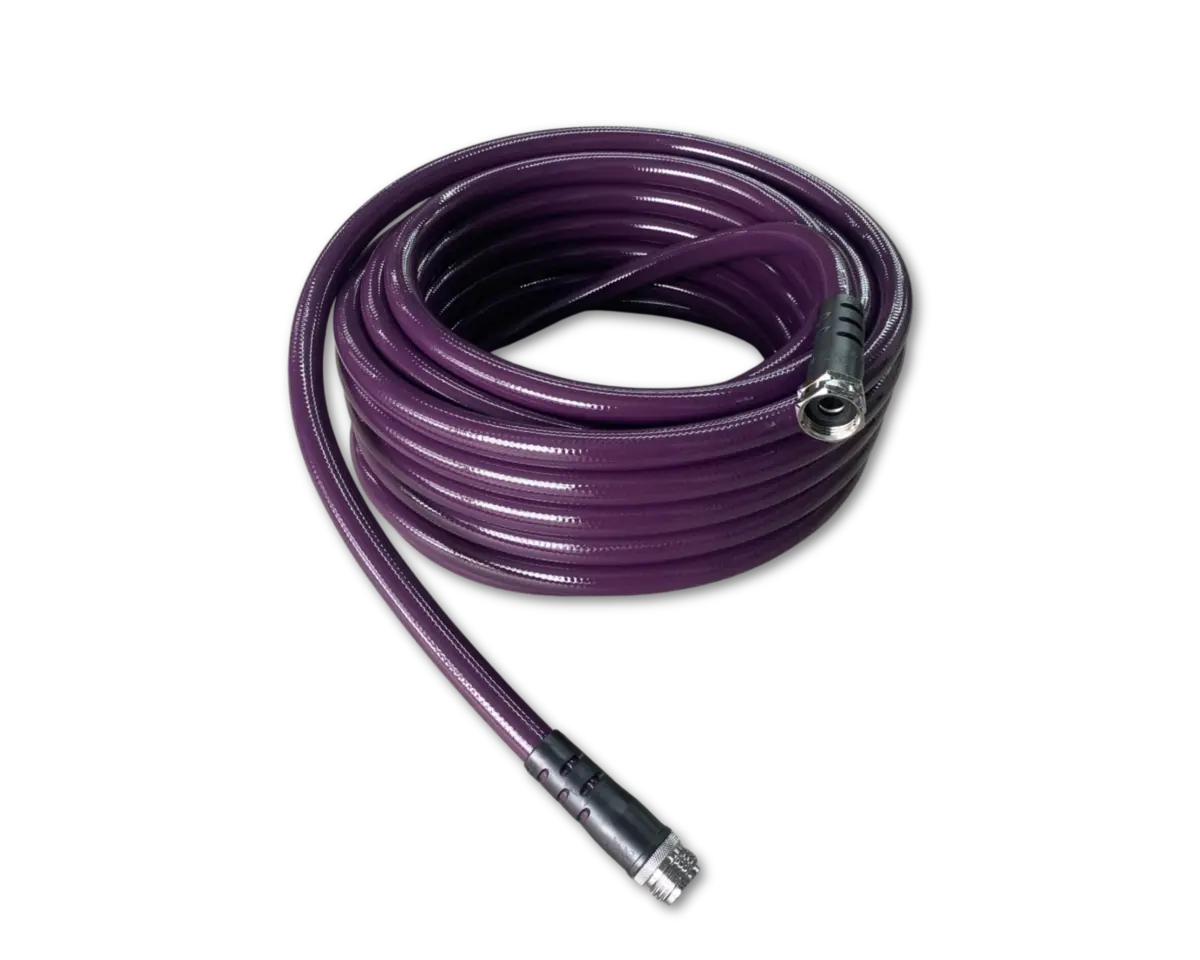
For a large garden, start with a 5/8-inch hose available in a 75- or 100-foot version. Water Right 600 leads this guide because its 5/8-inch bore suits a long run and the line comes in several lengths. It is a substantial hose. ELEY is easier to bend, carry, and connect when you plan to move the hose between areas.
She Gardens checked manufacturer documentation and independent tests for this guide. She Gardens did not conduct hands-on testing. The order follows the locked large-garden shortlist, not a personal field-test result.
Quick comparison
| Product | Best use | Why it fits a large garden | Main drawback |
|---|---|---|---|
| Water Right Heavy-Duty Garden Hose 5/8-inch (600 Series), 50-foot | Best overall reach | 5/8-inch bore and 6 to 100-foot choices | Less compact |
| ELEY 5/8-inch Polyurethane Garden Hose, 50-foot | Premium long-run option | 75- to 200-foot choices and full-flow fittings | Costs more |
| Swan Element MAXLite Premium Rubber+ Hose 5/8-inch x 50-foot (CELSGC58050) | Exposed runs | UV-resistant jacket and 400+ psi burst strength | 7.3 lb for 50 feet |
| Flexzilla Garden Hose, 5/8-inch x 50-foot (HFZG550YW) | Flexible length choice | 5- to 100-foot choices | More twisting in independent testing |
| Water Right All-Purpose Garden Hose 1/2-inch (500 Series), 50-foot | Lighter compromise | Up to 100 feet in a smaller bore | Less flow than 5/8 inch |
| Teknor Apex zero-G Garden Hose 5/8-inch x 50-foot (4001-50) | Light long reach | 5/8-inch bore and up to 100 feet | Lies flat when empty |
| Briggs & Stratton 8BS50 Heavy-Duty Rubber Garden Hose, 50-foot | Fixed heavy-duty run | 25- to 100-foot choices and rubber construction | Likely heavier to move |
Best overall: Water Right 600 Series
The 600 Series is the first hose to check for a large garden. Its 5/8-inch inner diameter suits a longer supply run better than the slimmer Water Right lines. The manufacturer lists 6-, 10-, 25-, 50-, 75-, and 100-foot lengths. Lead-free chrome-plated brass fittings with strain reliefs help when a long hose pulls against a tap or splitter. Water Right also says the polyurethane hose is flexible in all climates and usable with water up to 150°F at 50 psi. Those facts come from the manufacturer’s 600 Series listing.
The 100-foot option puts this model first, but it is not automatically the best size. Buy enough length to reach the farthest bed with working slack. The 5/8-inch bore also gives it more flow potential than the smaller Water Right formats in this shortlist, although distance and bends still reduce flow.
Pros: 5/8-inch bore; 100-foot option; lead-free brass fittings; 5-year warranty.
Cons: It is bulkier than the 400 and 500 Series hoses, and the selected length and color need a stock check.
Check the current Water Right 600 Series listing
Best premium option: ELEY polyurethane hose
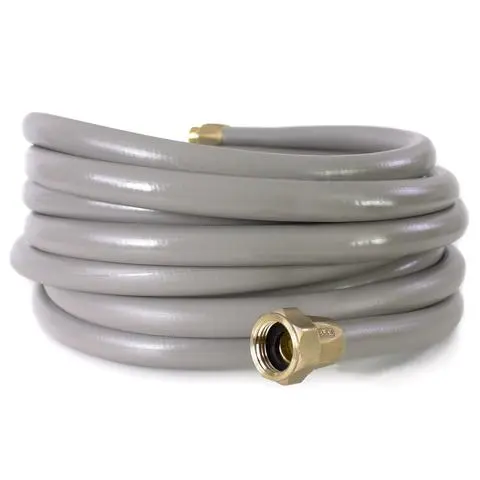
ELEY fits a large garden where the hose travels a long distance but still has to bend around beds and paths. The line ranges from 6.5 to 200 feet, including 75- and 100-foot versions. Its 5/8-inch bore, full-flow forged brass fittings, and stated 150 psi maximum working pressure suit general garden supply. ELEY states a 450 psi minimum burst pressure at 75°F, a -40°F to 165°F range, and a UV stabilizer in the outer layer on its polyurethane hose documentation.
This is the premium answer when you will move the hose instead of leaving it on one route. The full-flow fittings address the connection, and the flexible polyurethane line is easier to bend than a heavy rubber hose. A long coil still needs a storage plan. The length range gives you more control, but it does not remove the work of storing excess hose.
Pros: Many length choices; full-flow fittings; strong cold and heat range; 10-year no-leak, no-fail warranty.
Cons: It takes more room than lightweight fabric hoses, and longer versions add handling weight.
Check the current ELEY hose listing
Best for exposed runs: Swan Element MAXLite
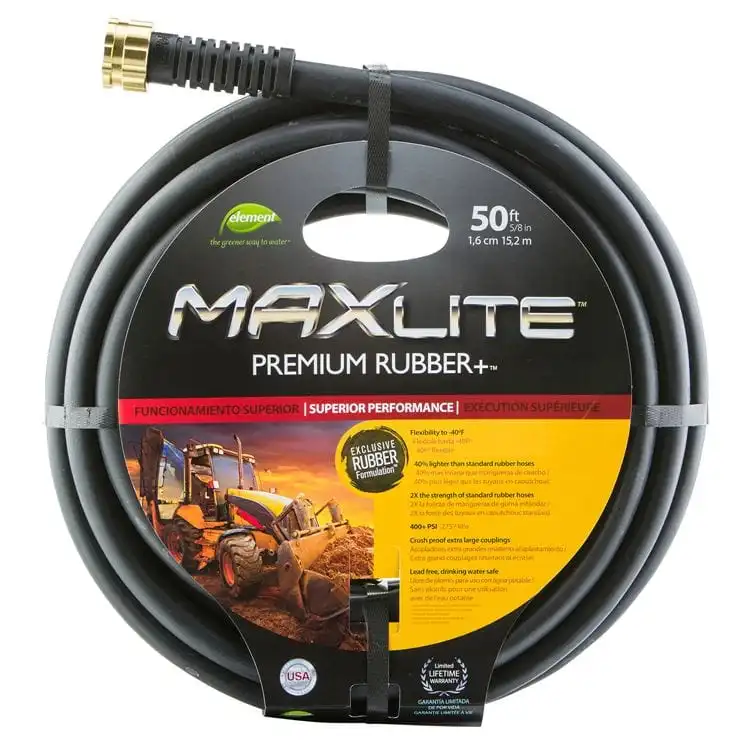
Choose Swan when much of the route stays outside and sun or rough ground matters more than easy carrying. The 5/8-inch hose comes in 25-, 50-, and 100-foot lengths. Swan claims a UV-resistant jacket that supports 30% longer life in the sun, flexibility to -40°F, and 400+ psi burst strength. Its manufacturer page also lists crush-proof aluminum couplings rated to 3,000 psi and Hose Armour at the female coupling.
Pros: Weather and UV claims; 100-foot option; strong burst claim; limited lifetime warranty.
Cons: It is heavier than polyurethane and fabric-jacketed alternatives, so frequent relocation takes more effort.
Check the current Swan MAXLite listing
Best when length varies: Flexzilla HFZG550YW
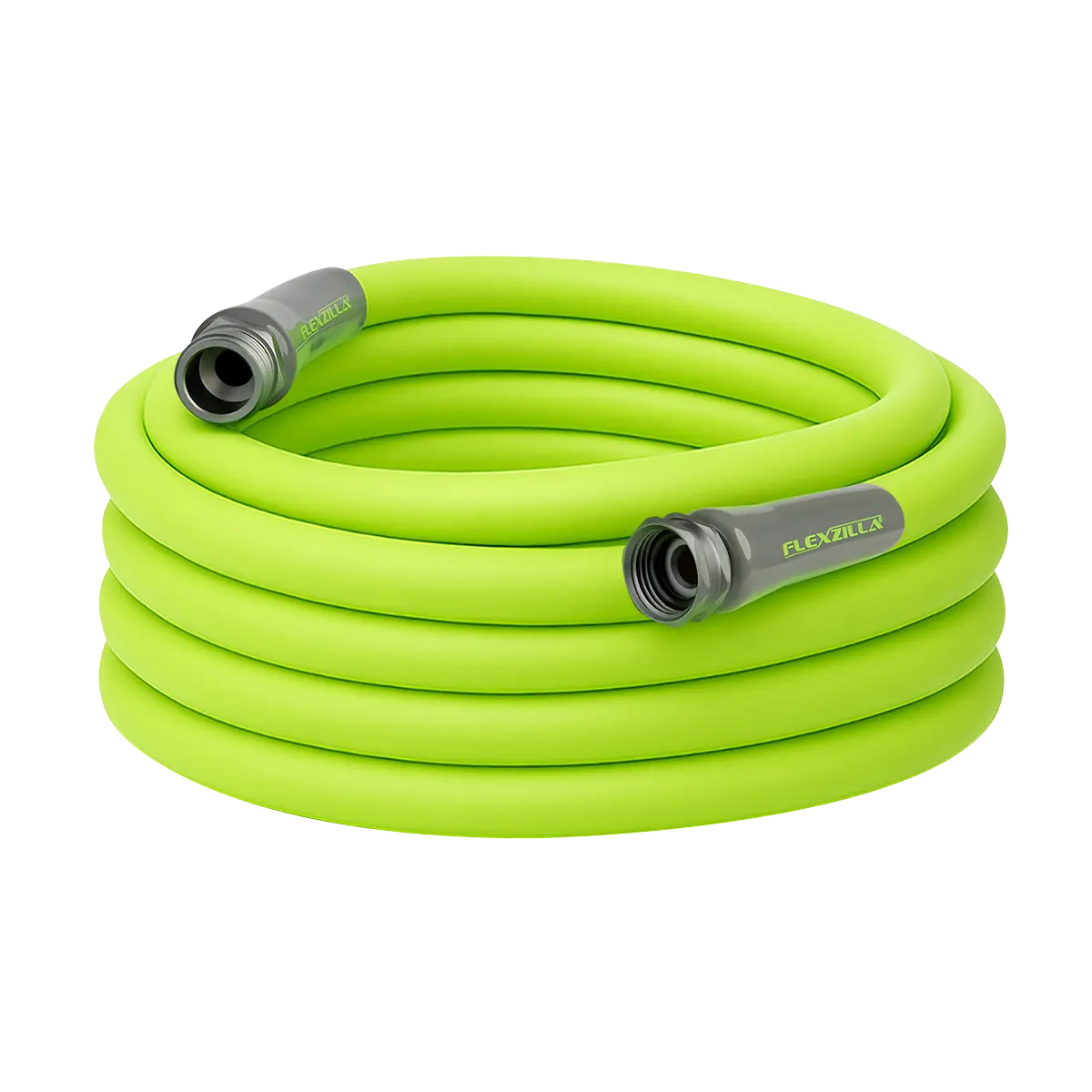
Flexzilla is useful when several tap-to-bed distances are possible. The line offers 5-, 10-, 15-, 25-, 50-, 75-, and 100-foot choices, all in a 5/8-inch format in the locked record. Its SwivelGrip fittings are crush-resistant anodized aircraft aluminum with standard 3/4-inch GHT connections. Flexzilla states all-weather flexibility from -40°F to 140°F and an abrasion-resistant outer cover on its product documentation.
Pros: Broad length range; flexible hybrid polymer; swivel fittings; limited lifetime warranty.
Cons: Independent testing found more twisting, and a 100-foot hose still takes storage space.
Check the current Flexzilla listing
Best lightweight compromise: Water Right 500 Series
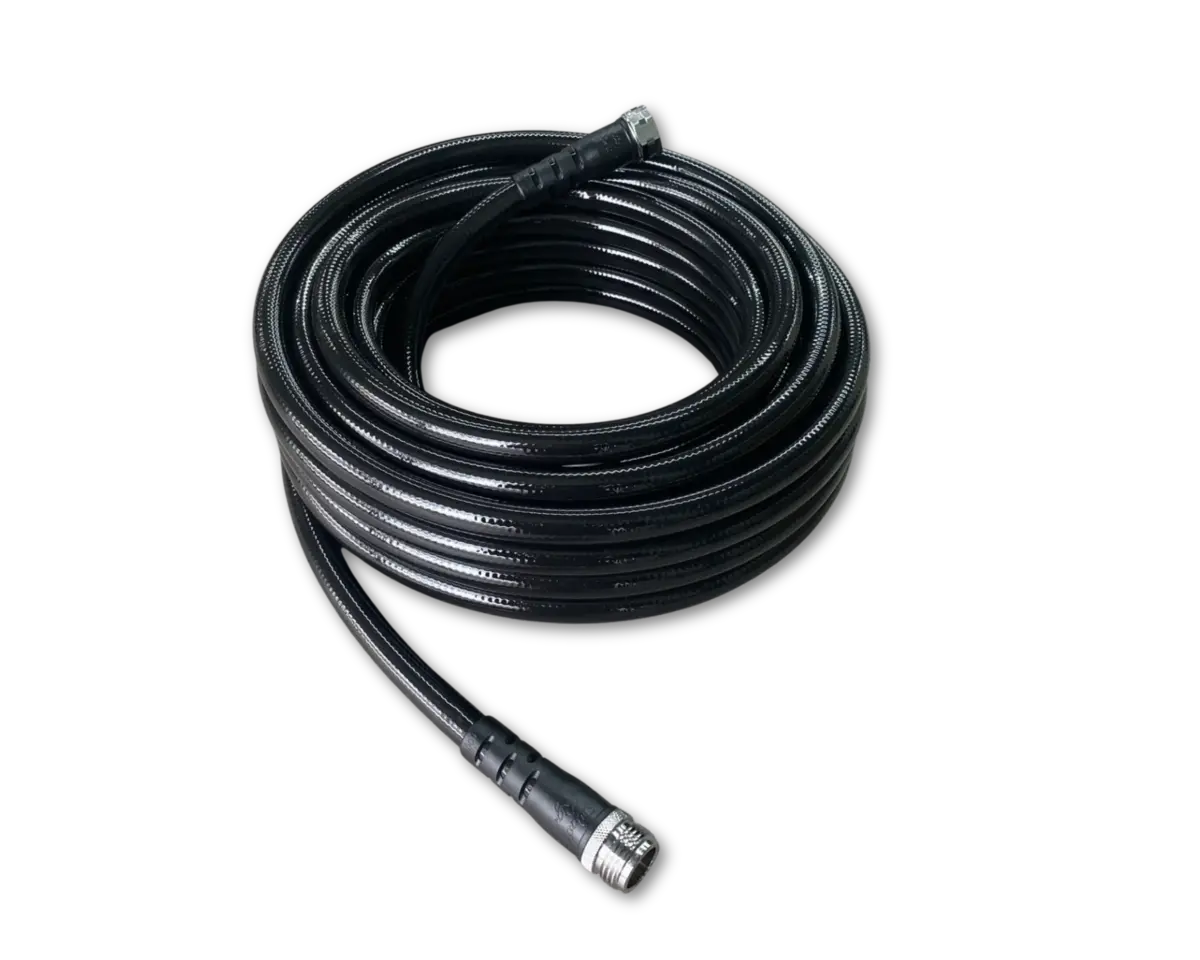
The 500 Series suits a garden that needs reach but does not need a full 5/8-inch workhorse. Water Right lists 6- through 100-foot choices, a 1/2-inch inner diameter, lead-free chrome-plated brass fittings, and strain reliefs. It also documents flexible-in-all-climates construction and use with water up to 150°F at 50 psi. See the 500 Series manufacturer listing for those claims.
The smaller bore is a deliberate compromise. It reduces bulk for someone who carries the hose, while the available 100-foot length preserves reach. Expect less flow potential than the 5/8-inch choices, especially across a long route. If the tap is already weak, compare the low-pressure hose guide before choosing a lighter line.
Pros: Up to 100 feet; smaller and easier to manage than a 5/8-inch hose; potable-water claim; 5-year warranty.
Cons: It has less flow potential than the 600 Series or ELEY, and the record gives no numeric pressure rating.
Check the current Water Right 500 Series listing
Best lightweight reach: Teknor Apex zero-G
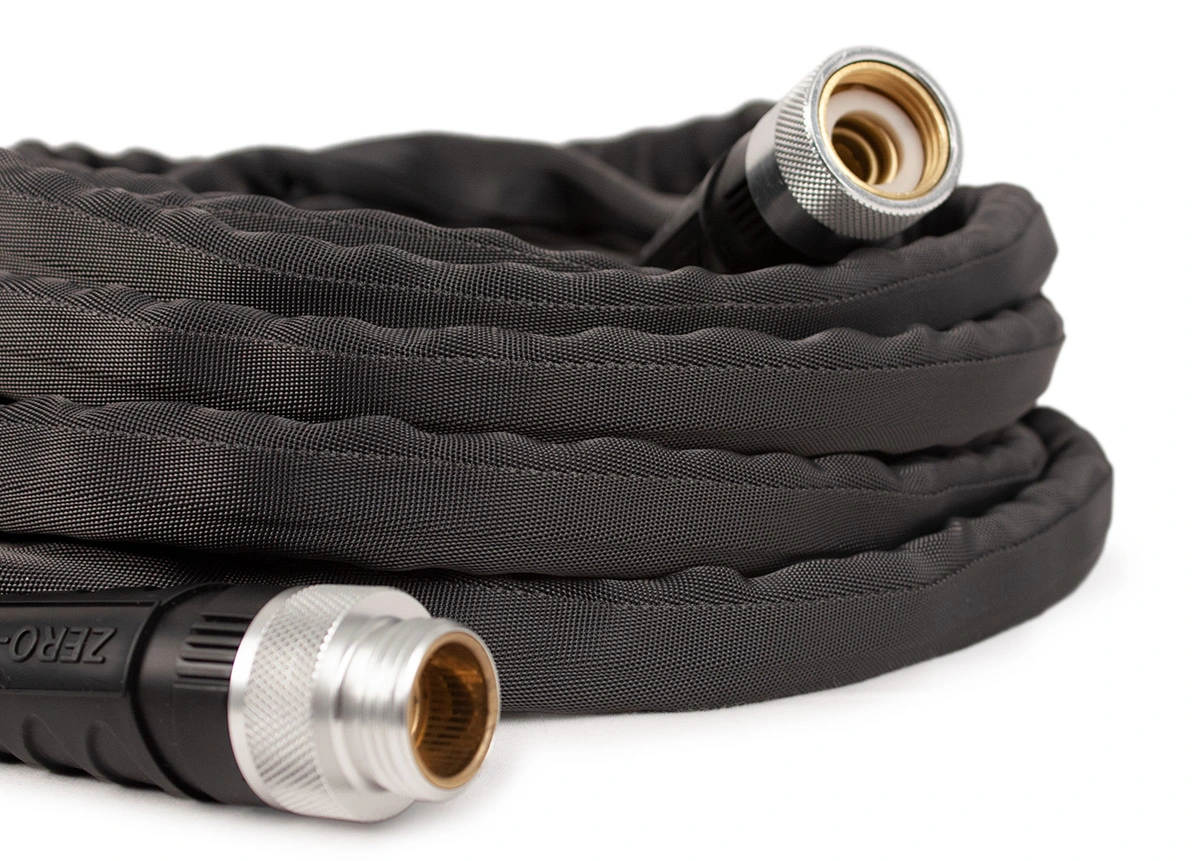
zero-G fits a long route when the person moving the hose does not want a conventional heavy rubber line. Teknor Apex says it is up to 50% lighter than standard garden hoses, with a 5/8-inch inner diameter and 25-, 50-, and 100-foot options. Its outer cover resists abrasion and punctures, and the hose is rated at 600+ psi burst. The manufacturer’s zero-G page also lists commercial-grade crush-resistant couplings and ergonomic grips.
zero-G is the reach option for buyers who carry the hose between areas. The lighter construction helps with that task, but the empty line lies flat, so storage may need more care. Check the weight and storage shape together. A light hose that is awkward to coil can still be wrong for a small shed or reel.
Pros: Lightweight construction; 5/8-inch bore; 100-foot option; high burst claim.
Cons: It lies flat when empty, has no explicit drinking-water claim, and has a 90-day store replacement for manufacturing defects.
Check the current zero-G listing
Best fixed heavy-duty run: Briggs & Stratton 8BS50
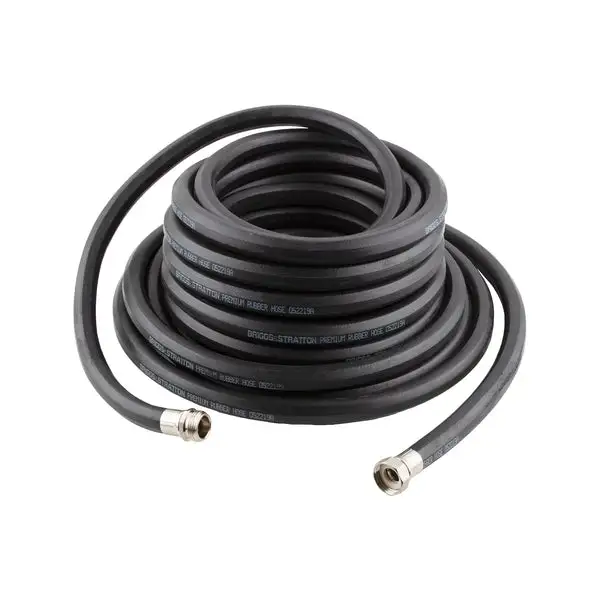
The 8BS50 suits a large garden where the hose can stay on one route and durability matters more than nimble movement. It uses 100T rubber with industrial-style reinforcement, crush-proof nickel-plated brass couplings, and 25-, 50-, 75-, and 100-foot length choices. Briggs & Stratton’s product-family documentation supports the construction and lists flexible extreme-cold handling plus hot-water use up to 200°F. The record gives no numeric burst rating.
Pros: 100-foot option; reinforced rubber; crush-proof brass couplings; limited lifetime warranty.
Cons: It is likely harder to move, and no numeric burst rating is stated.
Check the current Briggs & Stratton listing
What matters in a large garden
Measure the longest useful route first. Add enough length to reach the tap without a tight bend. A 100-foot hose is not automatically better when most of it stays coiled and full of water. The hose-reel guide is useful here because a reel changes how much length you can handle comfortably.
Inner diameter matters more as the route grows. The 5/8-inch models above are the better default for flow over distance. A 1/2-inch hose can be easier to carry, but it gives up flow potential. If the source is already weak, compare that tradeoff with the low-pressure hose guide.
Plan for drag and fittings. A long hose will rub against soil, paving, and bed edges. Look for the abrasion covers, strain reliefs, and crush-resistant fittings documented in the shortlist. Then choose a place for the empty hose. A 100-foot line needs a storage plan, even when the product page emphasizes flexibility.
Leave enough slack to work without pulling on the tap or splitter. Avoid broad loops that become trip points. If several areas need water, a reel or a shorter hose moved between outlets may be easier than one oversized line. The hose-reel guide covers storage and repeated winding.
Frequently asked questions
Will 100 feet cover a large garden?
That depends on the tap location and the route around the beds. Measure the farthest outlet, include the bends, and leave a little working slack. Extra length is harder to drain and store, so measure before buying.
Does 5/8 inch suit a long garden hose?
It is usually the better starting point for a long general-purpose run because the larger bore gives more flow potential than 1/2 inch or smaller formats. It cannot create pressure that the supply does not provide, and the larger hose can be harder to move.
Treat that as a starting point, not a promise of strong water. A long hose still adds distance and more chances to kink. Choose the shortest 5/8-inch length that reaches comfortably when flow is the priority.
Which material fits a large garden?
Choose rubber when the hose will stay on a demanding route and its documented heavy-duty construction matters. Choose polyurethane or hybrid polymer when you regularly drag the hose between areas. Movement should decide the material.
Rubber fits a rough, mostly fixed route. Polyurethane and hybrid polymer fit a garden where carrying and repositioning happen during every watering session. The product sections above show how different the handling can be at the same 100-foot reach.
Can a long garden hose stay outside?
Some products in the shortlist have weather, UV, and temperature claims. Those claims do not guarantee that a hose can stay pressurized or exposed indefinitely. Drain it, avoid sharp bends, and follow the manufacturer’s storage guidance.
If the tap has weak supply pressure, the low-pressure hose guide gives restriction more weight. For automatic storage, compare the hose-reel guide.
Recommendation
Choose Water Right 600 for the clearest reach-and-flow fit: a 5/8-inch bore, 100-foot availability, and fittings designed for repeated pulling. Choose ELEY for more length choices and stronger published temperature and flow details. If moving a long hose is the main problem, zero-G is lighter, although its empty shape is less tidy.
Sources and methodology
She Gardens used the locked She Gardens product shortlist and source registry researched on 29 August 2026. The comparison uses manufacturer specifications and the independent TechGearLab garden hose test, Project Farm garden hose comparison, and Popular Mechanics garden hose test for the products those sources cover. The product list, rankings, URLs, images, and claims stay within that pool. She Gardens did not conduct hands-on testing.