
Buying guide
Best Garden Hoses for Low Water Pressure: 7 Picks for Less Restriction
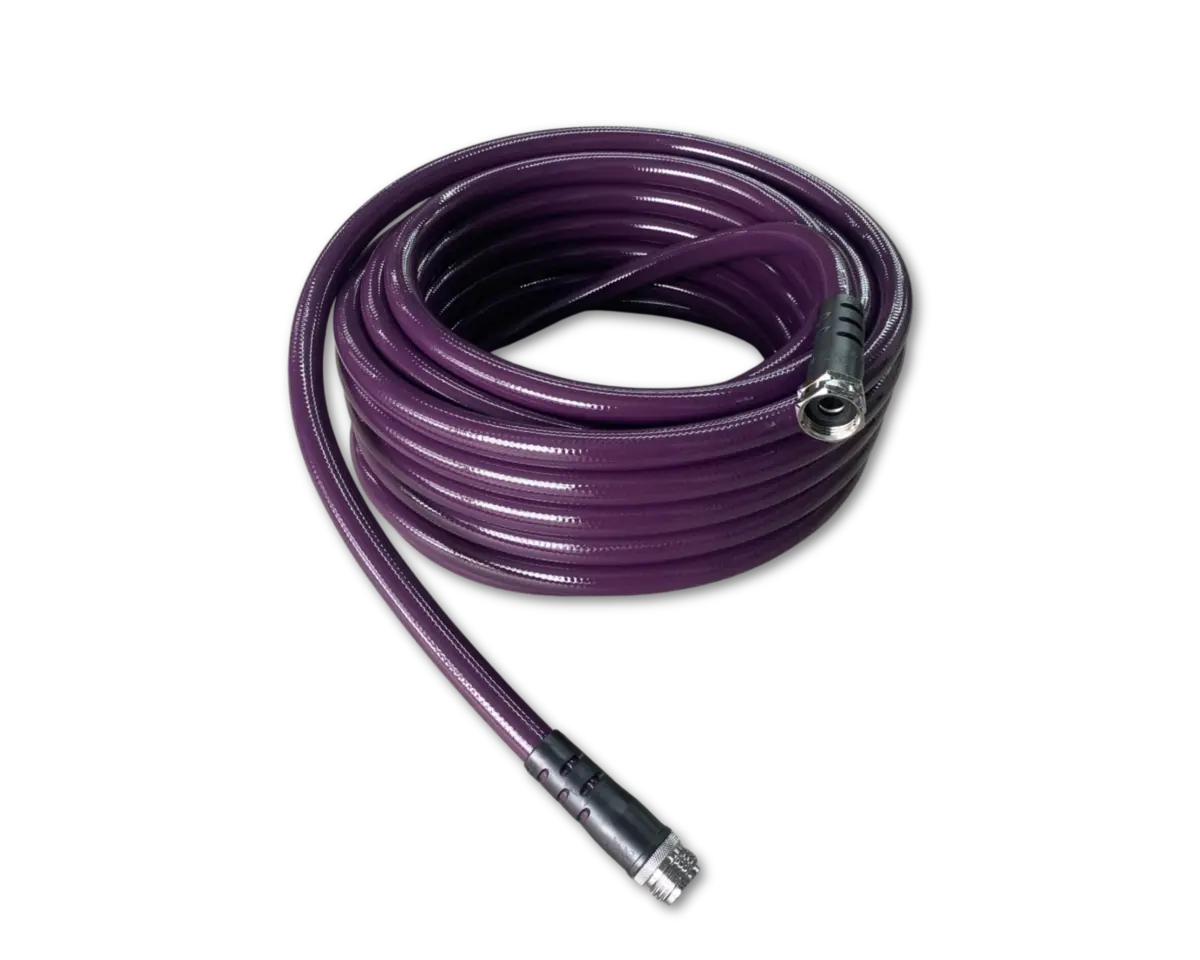
Water Right 600 is the sensible starting point for a short, direct 5/8-inch run. ELEY has the clearest fitting design for flow because the manufacturer calls its fittings full flow.
Quick comparison
Weak water pressure makes a narrow bore, a restrictive connector, or an overlong hose easier to feel at the nozzle. A hose cannot add pressure at the tap. This ranking gives priority to 5/8-inch inner diameter, connection design, the 50-foot format, and independent flow evidence where the locked pool includes it.
| Product | Best use | Why it fits weak supply | Main drawback |
|---|---|---|---|
| Water Right Heavy-Duty Garden Hose 5/8-inch (600 Series), 50-foot | Best short direct run | 5/8-inch bore with brass fittings | No independent source in the shortlist |
| ELEY 5/8-inch Polyurethane Garden Hose, 50-foot | Full-flow fittings | Full-flow, crush-proof brass fittings | Premium price and 7 lb weight |
| DEWALT Professional Grade Water Hose 5/8-inch x 50-foot (DXMH3285) | Outside flow evidence | Strong independent flow result | 7.9 lb; cold-water use only |
| STANLEY FATMAX Professional Grade Water Hose 5/8-inch x 50-foot (BDS6650B) | High measured flow | Popular Mechanics measured high flow | 7.8 lb; coupling metal unspecified |
| Swan Element MAXLite Premium Rubber+ Hose 5/8-inch x 50-foot (CELSGC58050) | Durable 5/8-inch hose | 5/8-inch bore with sturdy couplings | 7.3 lb |
| Teknor Apex zero-G Garden Hose 5/8-inch x 50-foot (4001-50) | Easier carrying | 5/8-inch format with commercial-grade couplings | Lies flat when empty |
| Dramm ColorStorm Professional Rubber Hose 5/8-inch x 50-foot (17003) | Conventional rubber | 5/8-inch bore with crush-proof brass fittings | 130 psi operating pressure; heavy |
She Gardens checked manufacturer documentation and independent tests, but did not test these hoses by hand. Keep the run short, open the tap fully, and check the tap, connector, nozzle, and filter before blaming the hose for weak flow.
Best direct-run choice: Water Right 600 Series
The Water Right Heavy-Duty 600 Series takes first place because it pairs the largest useful bore in the Water Right range with a straightforward 50-foot format. Its 5/8-inch inner diameter is a sensible starting point when a 1/2-inch or smaller hose has made a weak supply feel worse. The hose uses polyurethane and lead-free chrome-plated brass fittings with strain reliefs.
Pros: Drinking-water-safe material claims; 5/8-inch inner diameter; brass fittings with strain reliefs; 5-year warranty.
Cons: The record gives no pressure rating or weight, and the shortlist has no independent source for it.
Check the Water Right 600 Series on Amazon
Best for full-flow fittings: ELEY polyurethane hose
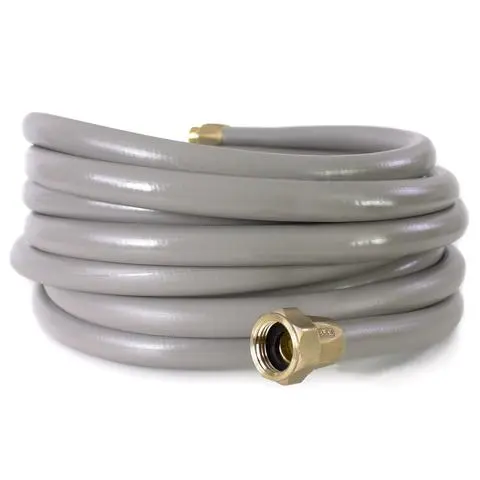
The ELEY 5/8-inch Polyurethane Garden Hose gets ahead of the other conventional hoses on a detail that matters with a weak supply. ELEY explicitly describes its forged brass fittings as full flow and crush proof. That does not promise a particular gallons-per-minute result, but it gives the connection less chance of becoming the main bottleneck.
The distinction matters because a hose can have a generous bore and still lose flow at either end. ELEY also has many length choices, so you can avoid adding unused hose to the run. The tradeoff is weight and cost. On a short route, the full-flow connection may justify the premium. On a long route, length and bends still matter just as much.
Pros: Full-flow fittings; 5/8-inch bore; 450 psi minimum burst pressure at 75°F; many length choices; 10-year no-leak, no-fail warranty.
Cons: The 50-foot hose weighs 7 pounds, costs more, and still loses available flow on a longer run.
Check the ELEY polyurethane hose on Amazon
Best independent flow evidence: DEWALT DXMH3285
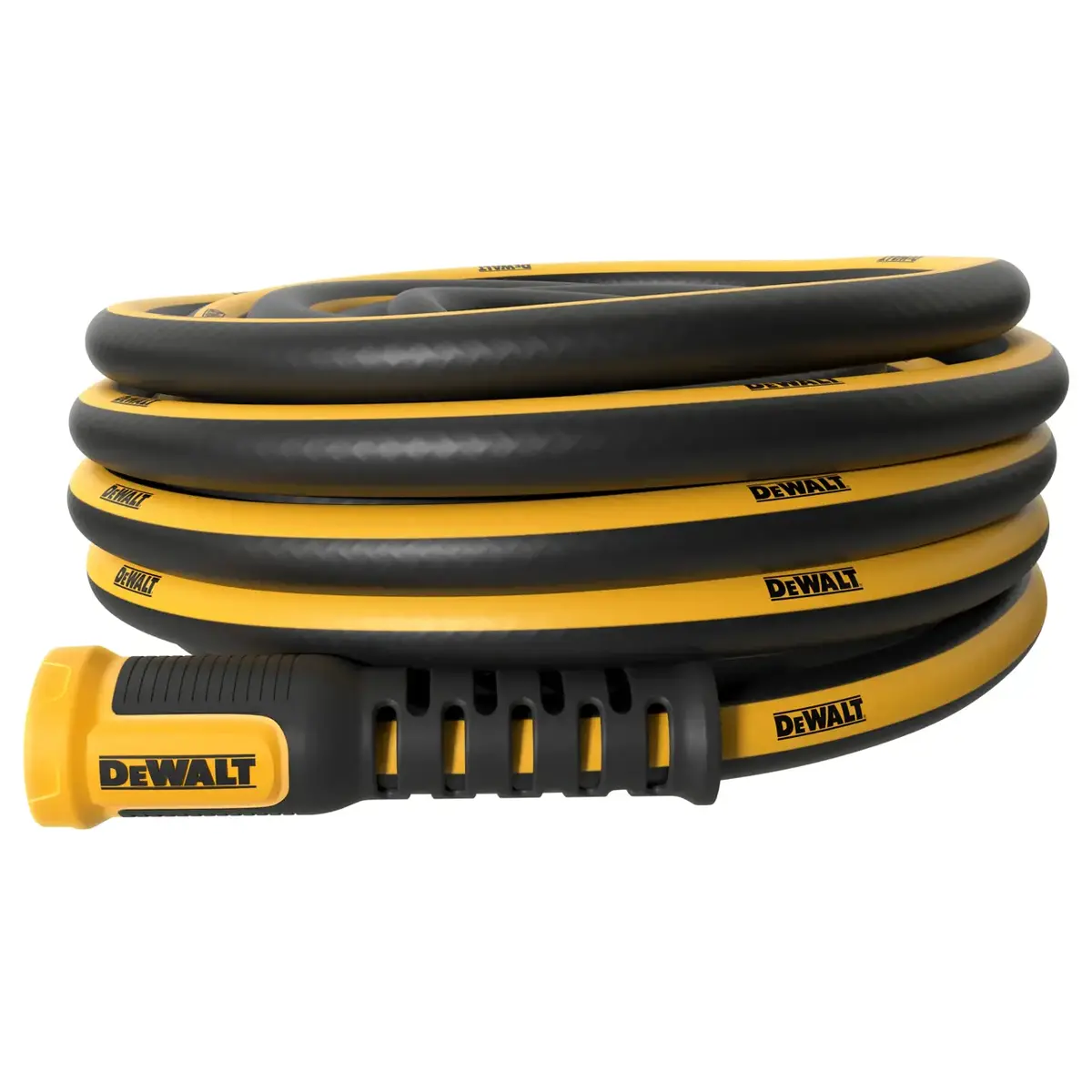
The DEWALT Professional Grade Water Hose earns this spot because the locked source registry records strong independent flow and coupling results from Popular Mechanics and Project Farm. For a low-pressure setup, that evidence says more than a large maximum-pressure number on a package.
Pros: Independent flow and coupling evidence; 5/8-inch bore; strain relief; grip sleeves; limited lifetime warranty.
Cons: It weighs 7.9 pounds in the measurement, is for cold-water use only, and has no potable-water claim.
Check the DEWALT DXMH3285 on Amazon
Best measured high-flow option: STANLEY FATMAX
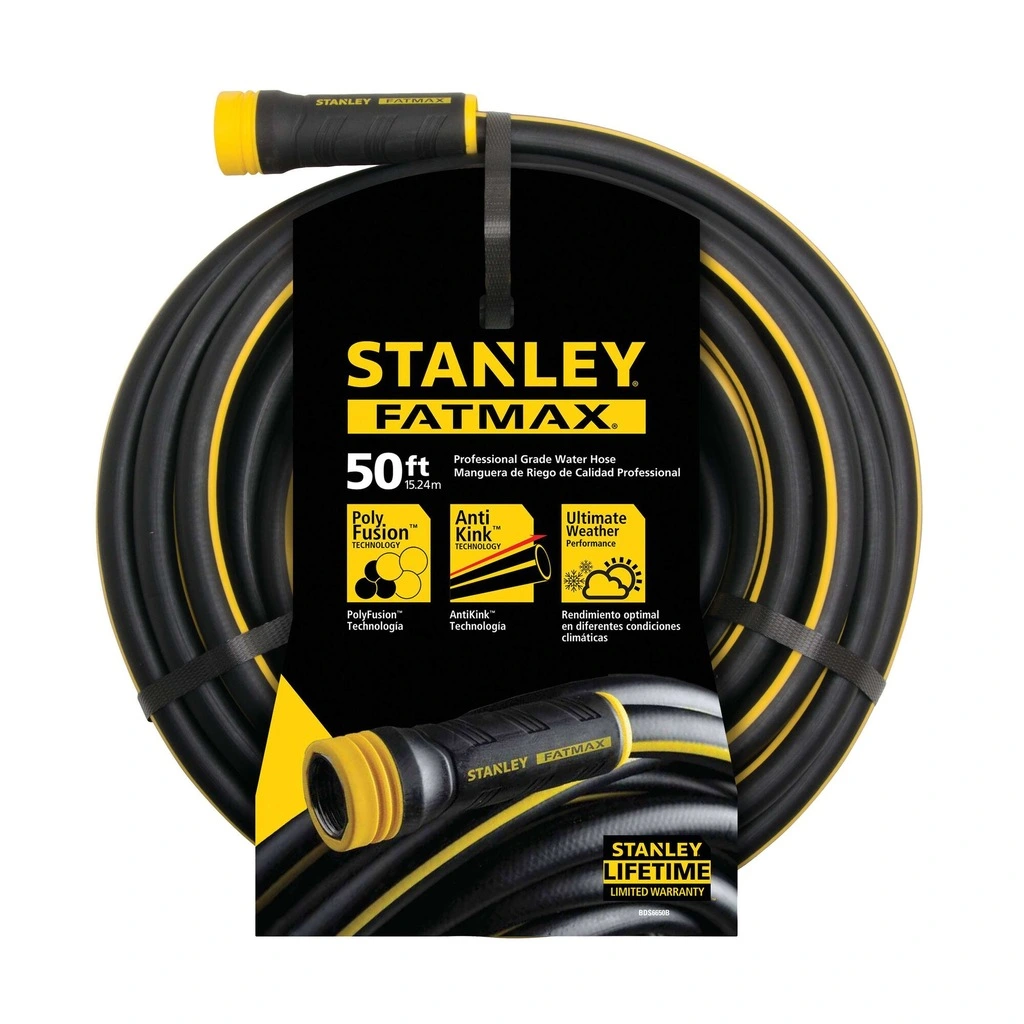
The STANLEY FATMAX Professional Grade Water Hose suits a buyer who wants reported high flow from a 50-foot hose rather than a theoretical pressure claim. Popular Mechanics measured high flow for this model in its independent garden-hose work. The 5/8-inch bore makes that result relevant here.
Pros: High measured flow; 5/8-inch bore; swivel grips; 500 psi maximum pressure; lifetime flexibility guarantee.
Cons: The measured weight is 7.8 pounds, the coupling material is unspecified, and there is no potable-water claim.
Check the STANLEY FATMAX hose on Amazon
Durable 5/8-inch option: Swan Element MAXLite
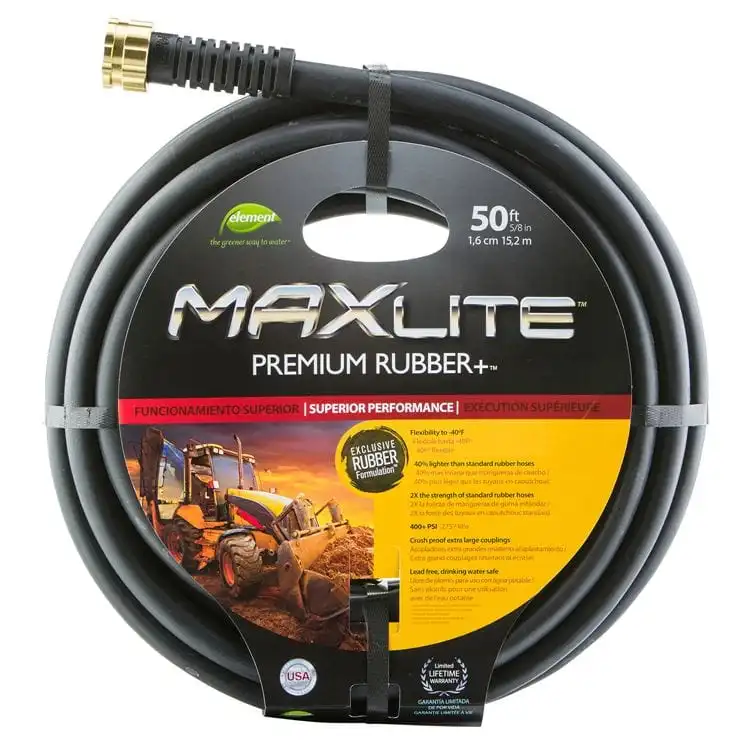
The Swan Element MAXLite Premium Rubber+ Hose fits a low-pressure setup where a durable 5/8-inch hose matters more than light handling. Swan lists a premium rubber formula, a UV-resistant jacket, 400+ psi burst strength, and crush-proof aluminum couplings. The manufacturer rates those couplings to 3,000 psi and adds Hose Armour at the female coupling.
Pros: 5/8-inch bore; UV-resistant jacket; 400+ psi burst strength; sturdy couplings; independent comparison coverage.
Cons: It weighs 7.3 pounds, the rubber takes more effort to move, and the locked record has no flow measurement.
Check the Swan Element MAXLite on Amazon
Best 5/8-inch hose for easier handling: Teknor Apex zero-G
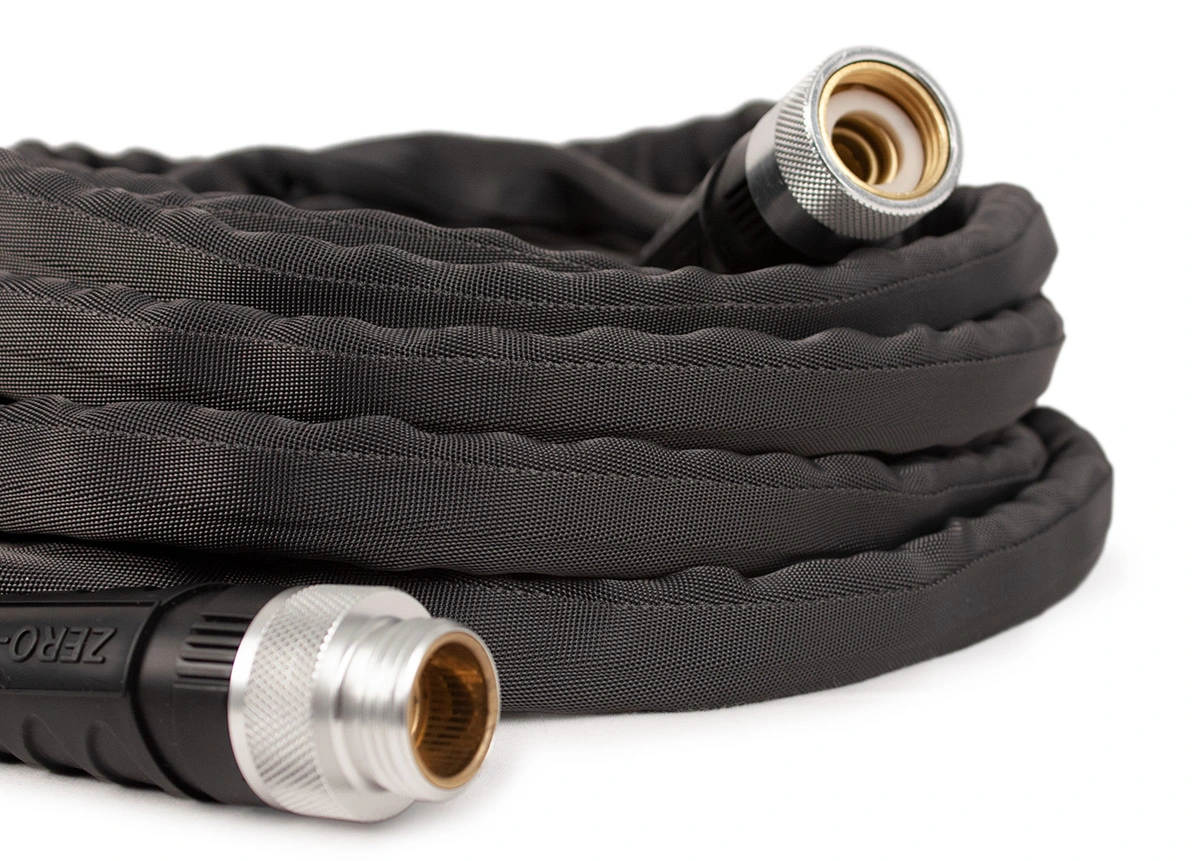
The Teknor Apex zero-G helps when weak flow means you need to reposition the hose often. The manufacturer says the fiber-jacketed hose is up to 50% lighter than standard garden hoses, making it easier to carry between taps or beds. It remains a 5/8-inch hose and uses commercial-grade crush-resistant couplings with a brass insert, ergonomic grips, and standard connections.
The light construction does not create more pressure. It reduces the effort of moving the line while you check the rest of the setup. That can help in a garden with several beds or taps. The empty hose lies flat, and its burst rating describes pressure resistance, not water delivery.
Pros: 5/8-inch bore; up to 50% lighter than standard hoses; ergonomic grips; 600+ psi burst rating; two independent sources.
Cons: It lies flat when empty, its burst pressure does not measure flow, and it has no potable-water claim.
Check the zero-G hose on Amazon
Best conventional rubber alternative: Dramm ColorStorm
The Dramm ColorStorm Professional Rubber Hose keeps the list in the familiar 5/8-inch format. Dramm lists crush-proof nickel-plated brass fittings, EPDM rubber with synthetic reinforcement, and a weather-resistant cover. The hose has a 130 psi maximum operating pressure and a 500 psi burst pressure. Neither number promises a flow rate, but the 5/8-inch bore and fitting construction avoid the narrow format to rule out first for this query.
Pros: 5/8-inch bore; crush-proof brass fittings; weather-resistant cover; 500 psi burst pressure; independent comparison coverage.
Cons: The operating pressure is 130 psi, the rubber construction is heavy, and the current page does not state a warranty.
Check the Dramm ColorStorm hose on Amazon
Choosing a hose for low water pressure
Start at the tap, not the package
Check the supply before buying. A partly open shutoff valve, clogged screen, narrow quick connector, dirty filter, or restrictive nozzle can waste more flow than the hose. Remove those variables one at a time. If only one outlet runs weakly, the plumbing or tap may be the problem.
Test the open tap first, then the end of the hose, and finally the nozzle. This shows where the drop begins before you buy anything. If the open tap is weak, the hose can only preserve what the supply provides.
Choose a 5/8-inch hose for a general-purpose run
All seven picks use a 5/8-inch inner diameter. That is deliberate. The larger common hose size gives low-pressure water a better chance of reaching the nozzle without the extra restriction of a smaller hose. It still cannot overcome a very low supply, and a very long 5/8-inch hose can lose more flow than a short one.
Match the diameter to the whole route. A 5/8-inch hose is a sensible general-purpose default, but an extra-long line still adds friction, bends, and storage loops. A shorter option may be better if it reaches the bed without strain. Keep the line straight during a flow check so kinks do not hide the hose’s effect.
Prefer full-flow or proven connections
ELEY is the only product here whose fittings are explicitly described as full flow. DEWALT and STANLEY have independent flow evidence. The other products have construction and coupling claims that support durability, but those claims do not prove a delivery rate. Burst pressure is not flow evidence.
Keep the run short and direct
Measure from the tap to the work area. If 25 feet reaches, do not buy 100 feet because it is available. Extra loops add friction and another place for a kink. For reach across a large property, read the large-garden hose guide, where distance and drag change the order. For a car wash, see the car-washing hose guide, which gives movement around a vehicle more weight.
Unused hose still has to be filled, moved, and stored. Measure around corners instead of measuring only in a straight line. Leave enough slack to work comfortably, but do not keep a large coil between the tap and nozzle when a shorter length will do.
Keep the hose open while you diagnose flow
Straighten the line, open the tap fully, and test with the nozzle removed. Add the nozzle and any quick connector one at a time. If the hose works at the open end but fails through the sprayer, the hose is not the cause. This check is more useful than expecting a bigger pressure claim to fix the setup.
Frequently asked questions
Can a garden hose increase water pressure?
A hose can reduce added restriction when you choose a suitable diameter, fittings, and length. It cannot create pressure at the tap or replace a plumbing repair. Check the open end first to see whether the hose is involved.
Does 5/8 inch suit low water pressure?
It is the most useful format in this shortlist because all seven products use a 5/8-inch inner diameter. Length and connections still matter. A short 1/2-inch hose may outperform a very long 5/8-inch hose in a particular setup. Treat 5/8 inch as the starting point, not proof that the whole system will have strong flow.
Does a high burst rating mean higher flow?
Burst pressure describes how much pressure the hose can withstand before failure under the stated test conditions. It does not measure gallons per minute. The zero-G’s 600+ psi burst rating makes the distinction clear.
Will a shorter hose help?
Yes, if it reaches the job without strain. A shorter, straight run usually adds less restriction than a long run with extra coils. Leave enough slack to avoid pulling on the fittings. Measure first so the shorter length does not force you around a corner.
If you need a long route across many beds, compare the large-garden hose guide. For a compact tap-to-planter run, see the small-space hose guide.
Recommendation
Choose Water Right 600 for a direct 5/8-inch run with documented material and fitting claims. ELEY is the better fit when explicit full-flow fittings matter more. DEWALT or STANLEY makes sense when independent flow evidence decides the purchase. Test the tap and nozzle with the line straight and fully open before replacing the hose.
Sources and methodology
She Gardens used the locked product shortlist and source registry dated 29 August 2026. Manufacturer pages supplied model identity, bore, construction, fitting descriptions, pressure language, temperature claims, warranty language, and availability notes. Independent evidence came from TechGearLab, Popular Mechanics, and Project Farm Reviews for the products those sources cover. She Gardens did not conduct hands-on testing. Confirm the exact variant and current checkout availability before buying.