
Buying guide
Best Garden Hoses for Washing Cars: 7 Picks for Steady, Gentle Water Flow
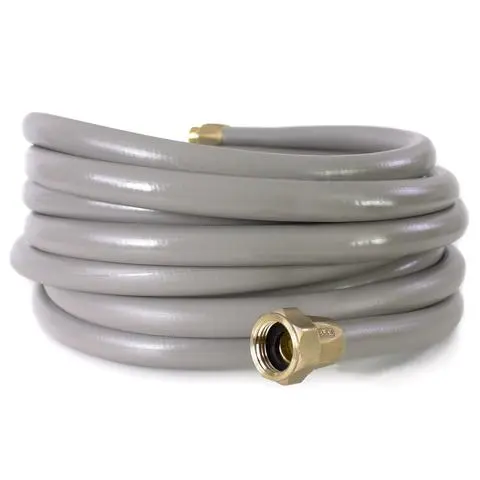
ELEY is the strongest all-around choice for washing a car because its polyurethane line has full-flow fittings. Pick Water Right 600 instead when drinking-water-safe materials and a 5/8-inch bore come first.
Quick comparison
A car-washing hose has to move around the vehicle without dragging hard fittings across the paint. It also needs to keep a steady supply moving to the nozzle or sprayer. This list focuses on 5/8-inch flow, flexible covers, manageable weight, and fittings that resist snags.
| Product | Best for | Why it fits washing a car | Main drawback |
|---|---|---|---|
| ELEY 5/8-inch Polyurethane Garden Hose, 50-foot | Top all-around pick | Full-flow fittings and flexible polyurethane | Premium price and 7 lb weight |
| Water Right Heavy-Duty Garden Hose 5/8-inch (600 Series), 50-foot | Drinking-water-safe washing | 5/8-inch bore with lead-free brass fittings | No independent source in the shortlist |
| DEWALT Professional Grade Water Hose 5/8-inch x 50-foot (DXMH3285) | Utility hose with outside evidence | Strong independent flow and coupling results | 7.9 lb; no potable or hot-water use |
| STANLEY FATMAX Professional Grade Water Hose 5/8-inch x 50-foot (BDS6650B) | Reported flow at 50 feet | High measured flow and swivel grips | 7.8 lb |
| Swan Element MAXLite Premium Rubber+ Hose 5/8-inch x 50-foot (CELSGC58050) | Sunny driveways | UV-resistant jacket and aluminum couplings | 7.3 lb, so it is less nimble |
| Teknor Apex zero-G Garden Hose 5/8-inch x 50-foot (4001-50) | Easier carrying | Up to 50% lighter than standard hoses | Lies flat empty; no potable-water claim |
| Dramm ColorStorm Professional Rubber Hose 5/8-inch x 50-foot (17003) | Traditional rubber handling | Weather-resistant cover and brass fittings | Heavy, with a 130 psi working pressure |
She Gardens checked manufacturer documentation and independent tests, but did not test these hoses by hand. Use a soft nozzle or wash mitt, keep couplings away from the paint, and use a pressure washer hose for a pressure-washer outlet.
Best overall for washing a car: ELEY polyurethane hose
The ELEY 5/8-inch Polyurethane Garden Hose leads this guide because its documented connection design suits a driveway wash. ELEY uses full-flow, crush-proof, lead-free forged brass fittings with standard 3/4-inch GHT threads. That keeps the connection from becoming the narrowest point before water reaches the nozzle.
Pros: Flexible polyurethane; 5/8-inch bore; full-flow brass fittings; UV stabilizer and heat resistance.
Cons: The 50-foot hose weighs 7 pounds, costs more, and takes more storage space than zero-G.
Check the ELEY polyurethane hose on Amazon
Best drinking-water-compatible alternative: Water Right 600 Series
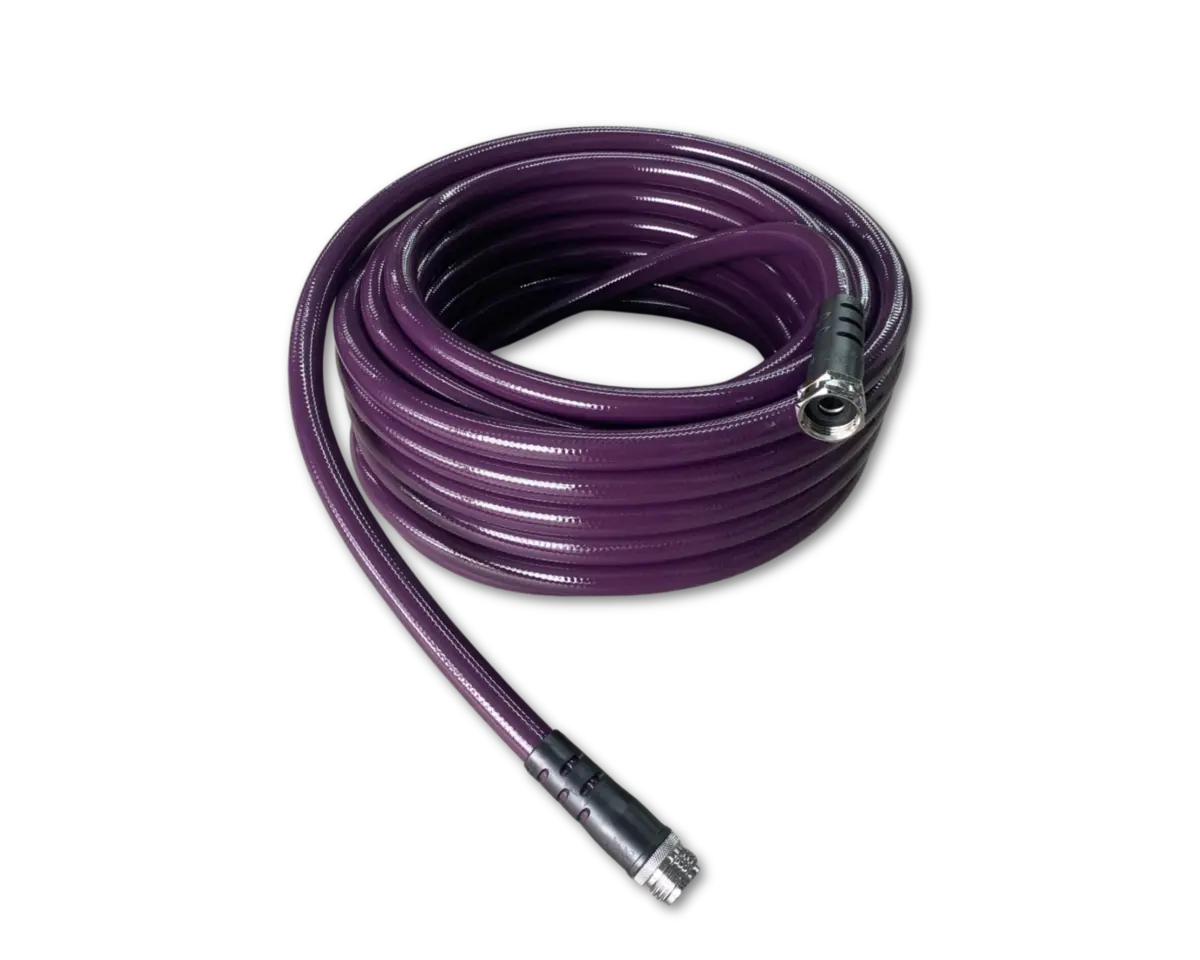
The Water Right Heavy-Duty 600 Series fits a car-washing setup that may also run near people, pets, or drinking-water equipment. Water Right lists drinking-water-safe polyurethane, lead-free, phthalate-free, and BPA-free materials. The hose also has lead-free chrome-plated brass fittings with strain reliefs. Its 5/8-inch inner diameter suits a standard 50-foot wash setup.
Pros: Drinking-water-safe material claims; 5/8-inch bore; lead-free brass fittings; strain reliefs; 5-year warranty.
Cons: The locked pool has no independent source, the weight is not stated, and heat use stops at the stated 150°F at 50 psi.
Check the Water Right 600 Series on Amazon
Best utility option with independent evidence: DEWALT DXMH3285
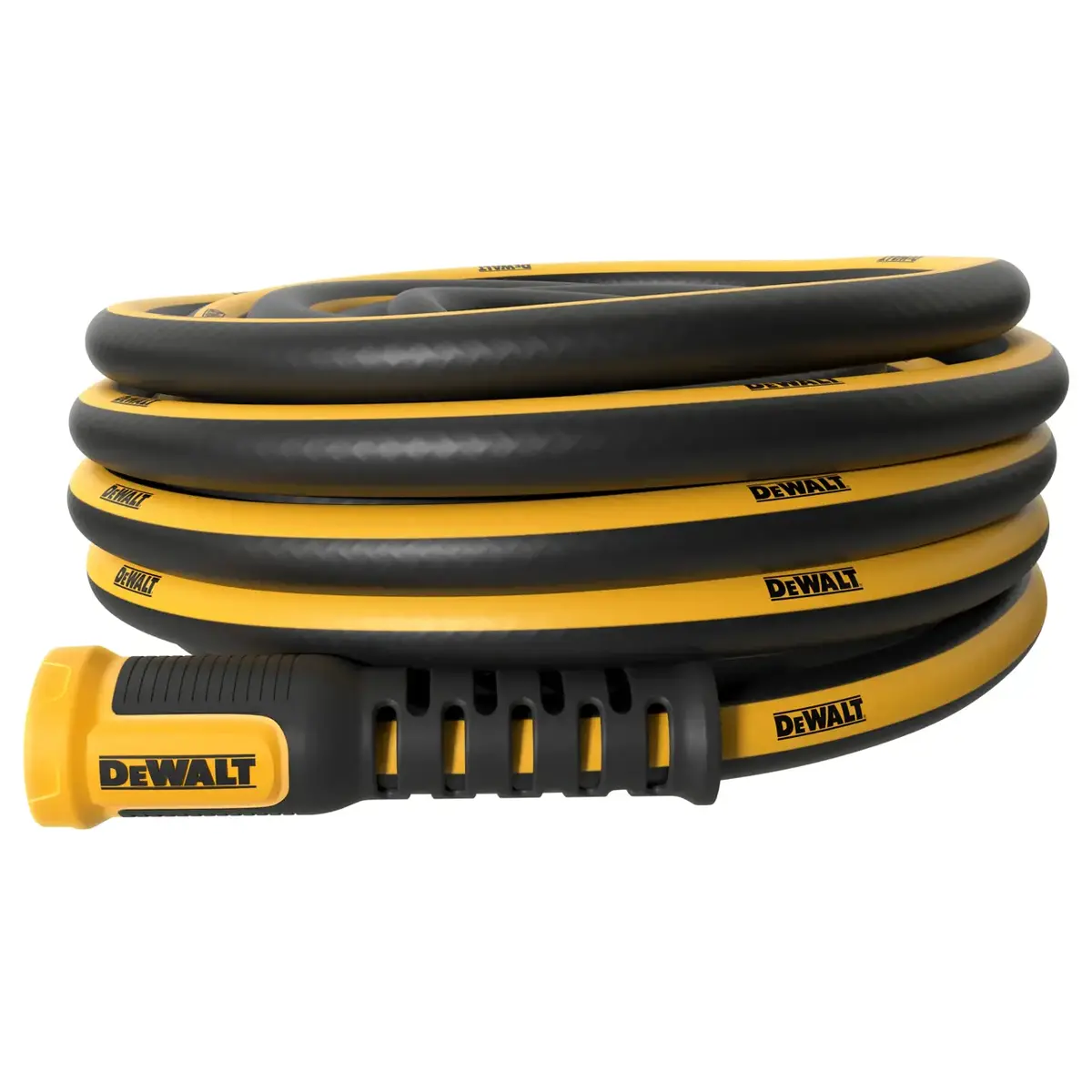
The DEWALT Professional Grade Water Hose suits buyers who want a conventional 5/8-inch hose with evidence beyond the brand page. The source registry lists Popular Mechanics and Project Farm for this model. Their record shows strong independent flow and coupling results, which supports its place in a steady-flow car-wash list.
Pros: Independent flow and coupling evidence; 5/8-inch bore; grip sleeves; strain relief; limited lifetime warranty.
Cons: It weighs 7.9 pounds in the measurement, is not for potable water, and is for cold-water use only.
Check the DEWALT DXMH3285 on Amazon
Best measured-flow option: STANLEY FATMAX
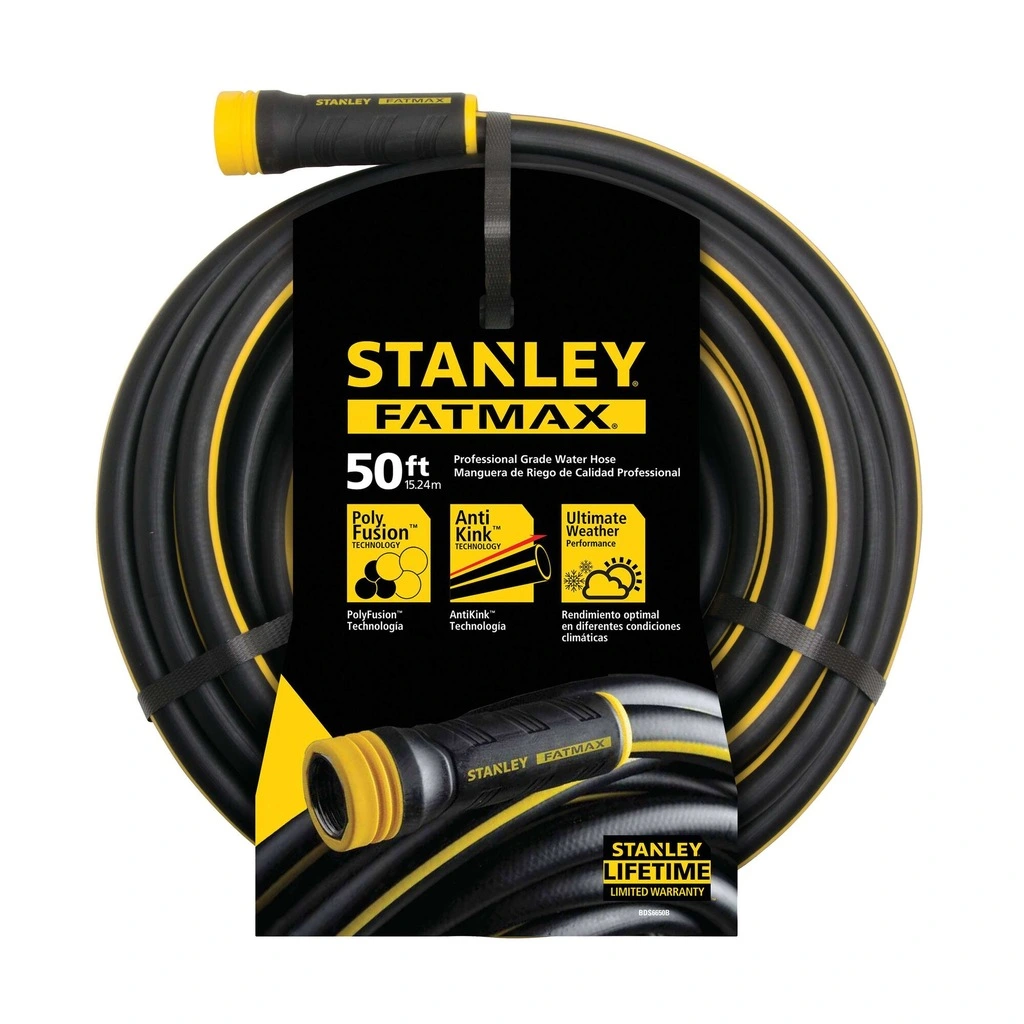
The STANLEY FATMAX Professional Grade Water Hose belongs near the top when measured delivery from a practical 50-foot hose matters most. Popular Mechanics supplies the independent test in the locked pool and measured this hose at 7.8 pounds. The large-diameter swivel grips help at the spigot or nozzle. The current manufacturer page does not say what metal the couplings use.
Pros: High measured flow; 5/8-inch bore; large swivel grips; 500 psi maximum pressure.
Cons: The tested weight is 7.8 pounds, the coupling metal is unspecified, and there is no potable-water claim.
Check the STANLEY FATMAX hose on Amazon
Best for a sunny driveway: Swan Element MAXLite
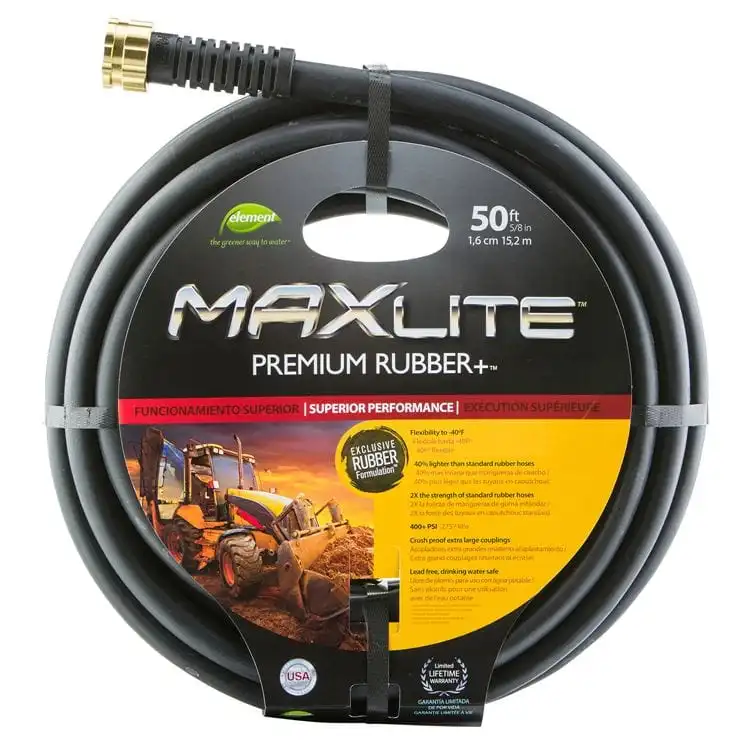
The Swan Element MAXLite Premium Rubber+ Hose fits a driveway where the hose sits in strong sun between washes. Swan describes a UV-resistant jacket and says the hose stays flexible to -40°F. It also lists 400+ psi burst strength, crush-proof aluminum couplings rated by the manufacturer to 3,000 psi, and Hose Armour at the female coupling.
Pros: UV-resistant jacket; 5/8-inch bore; 400+ psi burst strength; protected aluminum couplings; limited lifetime warranty.
Cons: It weighs 7.3 pounds, moves less easily than lighter polymer hoses, and has no separate stated heat limit.
Check the Swan Element MAXLite on Amazon
Lightest to move around a car: Teknor Apex zero-G
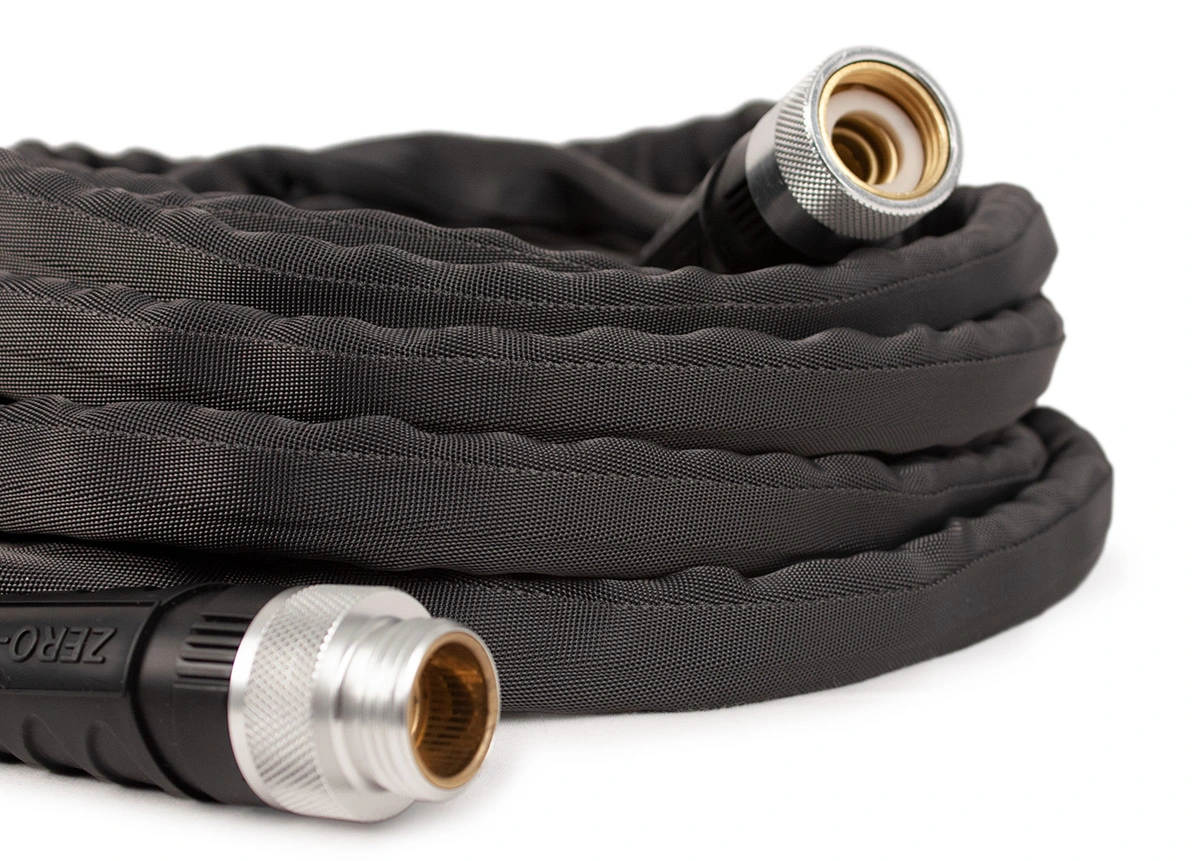
The Teknor Apex zero-G is the easiest fit when dragging a hose around the vehicle is the main nuisance. The manufacturer says its fiber-jacketed hose is up to 50% lighter than standard garden hoses. It has commercial-grade crush-resistant couplings with a brass insert, ergonomic grips, and standard hose connections. TechGearLab and Project Farm both provide independent evidence for the model.
Pros: Up to 50% lighter than standard hoses; ergonomic grips; crush-resistant couplings; independent testing from two sources.
Cons: It lies flat when empty, has no potable-water claim, and has no numeric heat or UV rating.
Check the zero-G hose on Amazon
Best rubber value alternative: Dramm ColorStorm
The Dramm ColorStorm Professional Rubber Hose fits ordinary outdoor washing when you prefer a traditional rubber cover. Dramm lists a 5/8-inch inner diameter, an abrasion- and weather-resistant cover, crush-proof nickel-plated brass fittings, and flexibility to -25°F. It is hot-water rated to 160°F too, although car washing should normally use water suited to the vehicle and soap.
Pros: Weather-resistant cover; brass fittings; 500 psi burst pressure; 5/8-inch bore; multiple length choices.
Cons: The rubber construction is heavy, the operating limit is 130 psi, and the current product page does not state a warranty.
Check the Dramm ColorStorm hose on Amazon
How to choose a hose for washing a car
Prioritize a steady supply, not a bigger pressure number
Most garden-hose car washing uses a nozzle, foam attachment, or bucket. Choose a hose that can supply that tool without an unnecessarily narrow connection. All seven picks use a 5/8-inch inner diameter. Large pressure numbers describe durability or maximum-use conditions. They do not say whether a spray is safe for paint.
The hose is one part of the water path. A 5/8-inch bore suits a normal driveway setup, but it cannot fix a weak spigot or restrictive attachment. Full-flow fittings address the connection without promising a particular flow rate. If the supply is already limited, the low-pressure hose guide gives that problem priority.
Keep hard parts away from paint
The cover is only part of the paint risk. Brass or aluminum couplings can mark a panel when they drag across it, and grit on the hose can do the same. Route the hose around the car before turning on the water. Pull from the middle of the line instead of the nozzle connection, and lift the coupling over a corner rather than sliding it.
Choose a cover you can control
Polyurethane and hybrid polymer hoses make sense when you move around the vehicle. Rubber handles rough driveways and sun exposure well, but the measured weights explain the extra effort. zero-G is the easiest to handle in this ranking. ELEY has the more complete connection design, at a higher weight and cost.
Material choice comes down to handling here. A hose that is easy to lift helps when you change sides often. A heavier rubber hose can make sense on a fixed route that spends more time in the sun. Compare the cover, coupling design, and stated weight together. The same material will not suit every driveway.
Use the shortest length that reaches both sides
Fifty feet is a useful starting point for one driveway, but measure first. Extra length means more loops and more chances for the hose to touch dirty ground or bodywork. If you need a reel, see the hose-reel guide. If the outside tap has weak flow, compare the low-pressure hose guide instead.
Measure from the tap to the farthest point you will wash, then add room to turn the nozzle. Advertised length is not all usable reach if part of the hose stays behind a reel or wraps around a corner. A shorter hose is easier to rinse, carry, and store. A longer hose earns its place when it keeps you from tugging at fittings or moving the tap setup halfway through the wash.
Frequently asked questions
Is a garden hose safe for car paint?
The hose does not make car washing safe for paint. Dirt, grit, and hard fittings can scratch a finish when dragged across it. Keep the hose on the ground and couplings away from panels. Use a clean nozzle, mitt, and drying towel.
Is 5/8 inch enough for washing a car?
For a typical 50-foot driveway wash, 5/8 inch is the most useful common format in this shortlist. It has more flow potential than a narrow utility hose. Actual delivery still depends on the spigot, nozzle, length, fittings, and supply pressure.
Use 5/8 inch as a practical default, not a rule for every car or tap. A short hose with a smaller bore may be enough for a nearby spigot. A longer hose with the same bore can behave differently once the route, fittings, and nozzle add resistance. Match the diameter to the setup instead of buying by size alone.
Can these hoses work with a pressure washer?
This guide covers the garden hose that supplies wash water to a car. None of these hoses becomes a high-pressure outlet hose because of that use. Follow the pressure washer maker’s inlet and outlet requirements.
Is rubber or polyurethane better for washing a car?
Polyurethane is usually easier to route when handling effort matters. Rubber makes more sense when you want a weather-resistant cover and can accept a heavier line. ELEY and zero-G are the easier hoses to move here. Swan and Dramm have the stronger cover-durability case.
For home car washing, choose the hose you can place without dragging fittings over the vehicle. ELEY or zero-G fits a setup where movement is the daily annoyance. Swan or Dramm makes more sense when a substantial cover matters and the route stays predictable. Water Right 600 sits between those choices with a full-size bore and drinking-water-safe materials.
If the car is far from the tap, compare the large-garden hose guide. If automatic storage matters, the hose-reel guide changes the ranking.
Recommendation
Buy ELEY for the best balance of 5/8-inch flow, flexible handling, and full-flow fittings. Choose Water Right 600 for its documented drinking-water-safe materials, or zero-G when carrying and routing cause the most trouble. Plan the route before the first spray and keep hard fittings off the paint.
Sources and methodology
She Gardens used the locked product shortlist and source registry dated 29 August 2026. Manufacturer pages supplied model identity, construction, dimensions, fitting descriptions, temperature or water-use claims, warranty language, and availability notes. Independent evidence came from TechGearLab, Popular Mechanics, and Project Farm Reviews for the products those sources cover. She Gardens did not conduct hands-on testing. Confirm the exact variant and current checkout availability before buying.