
Buying guide
Best pest control for lawns: 7 outdoor products compared
Ortho Lawn & Landscape Insect Killer Ready-to-Spray is the strongest large-area format in this locked pool. Ortho Home Defense Granules are the simpler granule alternative, while Bonide Captain Jack's Dead Bug Brew fits a different garden and lawn label scope.
Quick answer
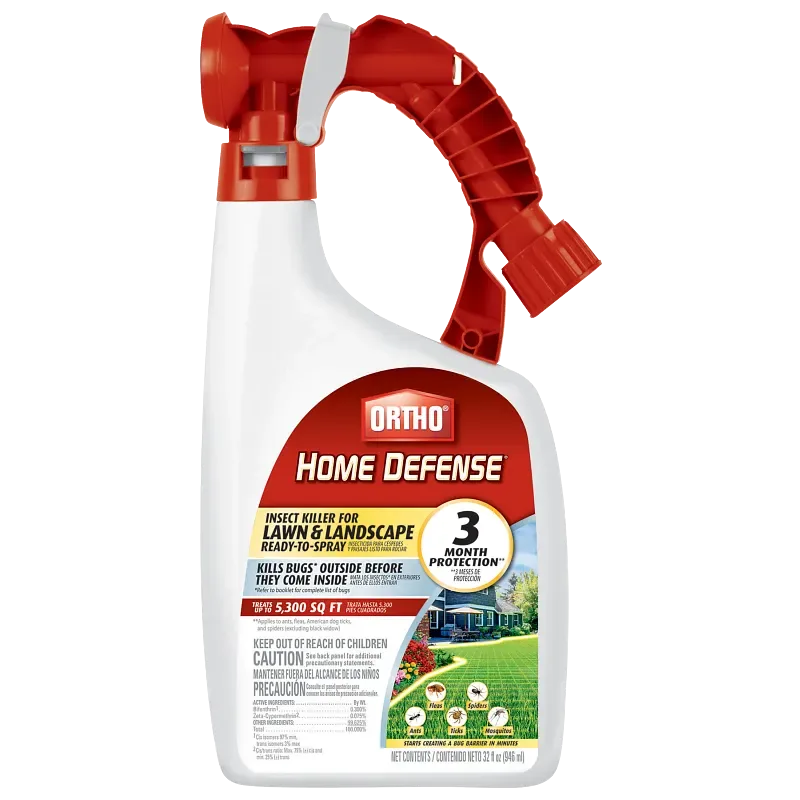
Ortho Lawn & Landscape Insect Killer Ready-to-Spray ranks first for a lawn buyer who wants a hose-end format. The locked record lists bifenthrin at 0.30% and zeta-cypermethrin at 0.075%, with lawn and landscape insects named on the current label. It is intended for outdoor lawns, landscapes, plus ornamental plants listed on the label.
Ortho Home Defense Insect Killer Granules ranks second for a granular format. Its record lists bifenthrin at 0.115% and lawn and landscape insects as targets. Amdro Quick Kill Lawn Insect Killer Granules ranks third, but the locked research flags its active-ingredient percentage for current-label transcription. That percentage remains unreported here.
Bonide Captain Jack’s Dead Bug Brew, Bonide Eight, Monterey Garden Insect Spray concentrate, and Monterey RTU cover lawn or garden contexts with their own target and site wording. Garden crop directions do not automatically transfer to a lawn. A product’s outdoor label is not one universal permission slip.
She Gardens did not apply these products, identify lawn insects, test re-entry, measure runoff, or promise control. The locked source set was researched on 29 August 2026. Read the current product label before use. EPA registration, allowed targets, application form, drying or re-entry directions, and state registration vary by jurisdiction. Follow the current label exactly.
| Rank | Product | Best fit | Main drawback |
|---|---|---|---|
| 1 | Ortho Lawn & Landscape Insect Killer Ready-to-Spray | Hose-end lawn and landscape treatment | Drift and runoff control |
| 2 | Ortho Home Defense Insect Killer Granules | Granular lawn format | Watering and application rules |
| 3 | Amdro Quick Kill Lawn Insect Killer Granules | Broadcast lawn granules | Active percentage needs recheck |
| 4 | Bonide Captain Jack’s Dead Bug Brew Ready-to-Use | Labeled lawn and garden targets | Crop and pollinator directions |
| 5 | Bonide Eight Garden & Home Ready-to-Use | Outdoor lawn or garden sites | Target list and runoff limits |
| 6 | Monterey Garden Insect Spray | Concentrate for labeled garden and lawn sites | Dilution and crop rules |
| 7 | Monterey Garden Insect Spray Ready-to-Use | Ready-to-use outdoor sites | Garden-specific limits |
The seven lawn picks
1. Ortho Lawn & Landscape Insect Killer Ready-to-Spray
This Ortho product ranks first because the format matches a lawn and landscape area better than a small bottle. The locked record lists bifenthrin at 0.30% and zeta-cypermethrin at 0.075%. Its target record covers lawn and landscape insects named on the current label, with outdoor lawns, landscapes, plus ornamental plants as labeled sites.
Hose-end application brings its own work. Control drift and runoff according to the label. Follow its water-contact, drying, and re-entry directions. Read the Ortho product page and EPA registration 239-2718 before use.
Pros: Hose-end format; lawn and landscape scope; active ingredients are documented.
Cons: Spray drift and runoff need control; a large format does not promise a result on every lawn.
Check Ortho Lawn & Landscape Insect Killer
2. Ortho Home Defense Insect Killer Granules
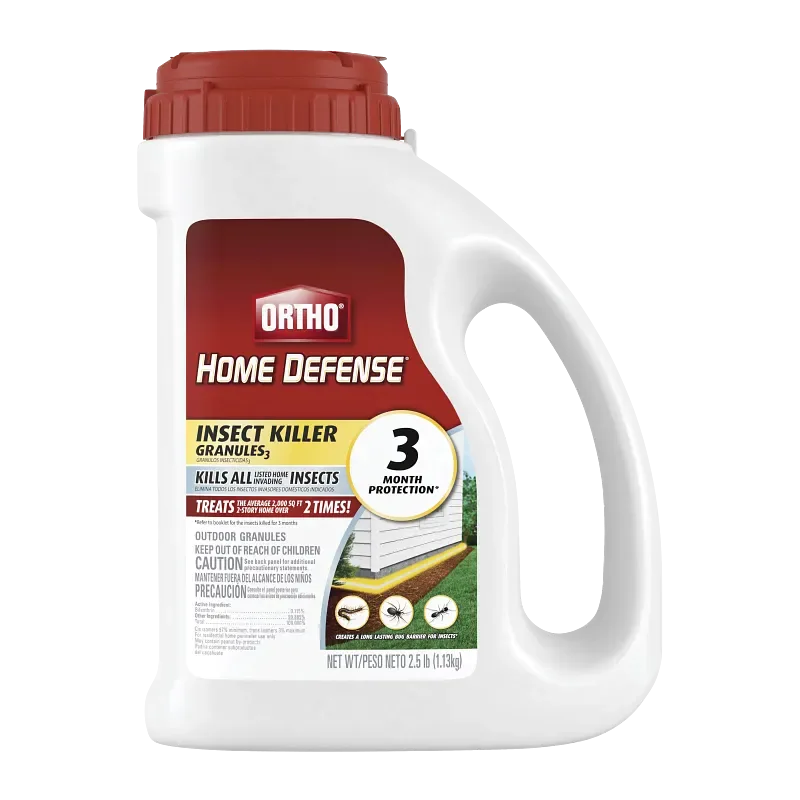
Ortho Home Defense Granules is the granule option in the top two. The locked record lists bifenthrin at 0.115%, with lawn and landscape insects as the target category and outdoor lawns and landscapes as labeled sites.
Granules remove hose-end mixing from the format, but they do not remove application or watering directions. Use the Ortho manufacturer page, current label, and EPA registration 239-2726.
Pros: Granular lawn format; bifenthrin percentage is recorded; outdoor lawn and landscape scope.
Cons: Watering, runoff, and application directions still govern; granules are not a garden-crop shortcut.
Check Ortho Home Defense Granules
3. Amdro Quick Kill Lawn Insect Killer Granules
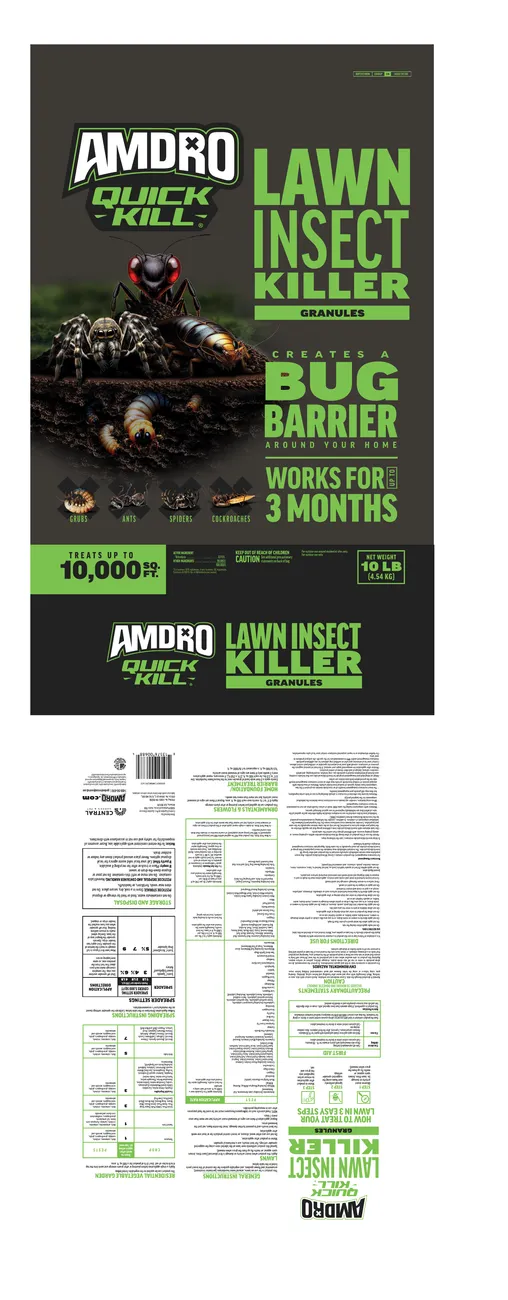
Amdro Quick Kill is a granular lawn insecticide with lawn insects as the target category and outdoor lawns and labeled landscape sites as recorded locations. The locked record names bifenthrin as the active ingredient, but the manifest flags the percentage for current-label transcription. This guide does not repeat a percentage that the locked research has not cleared.
That missing field is a reason to check the package before buying, not a reason to guess. Use the Amdro product page and current EPA label for the exact label, application limits, and registration record.
Pros: Granular lawn format; lawn target and outdoor site are recorded; active ingredient name is documented.
Cons: Active percentage needs current-label confirmation; broadcast, watering, and re-entry rules remain.
Check Amdro Quick Kill Lawn Granules
4. Bonide Captain Jack’s Dead Bug Brew Ready-to-Use
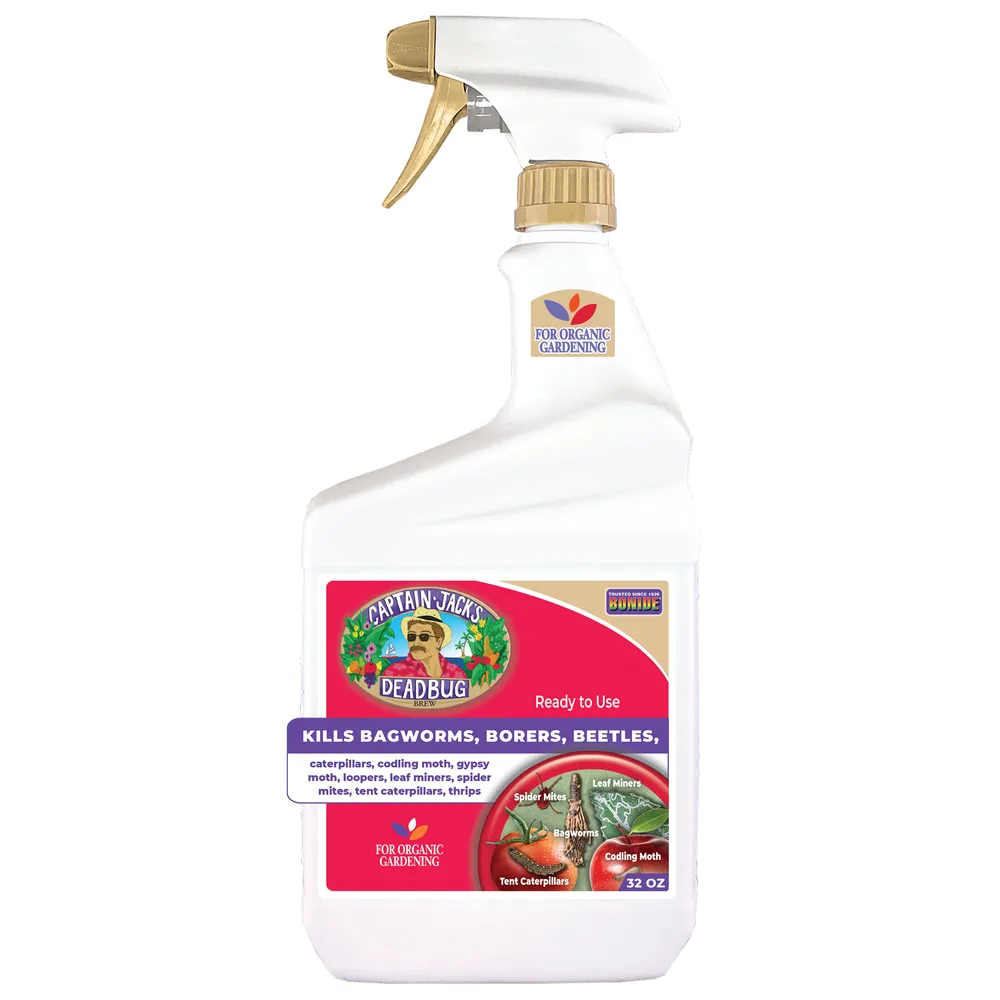
Bonide Captain Jack’s Dead Bug Brew is a ready-to-use spinosad spray with spinosad at 0.001% in the locked record. Its target list is the set of insects named on the current label. Recorded sites include outdoor residential vegetables, fruits, ornamentals, and lawns.
The product page uses organic-gardening language for the product family. That wording does not change the label, exposure, crop, or pollinator directions. Read the Bonide product page, Bonide label, and EPA registration 4-472 for lawn and crop directions. Read the pollinator and re-entry sections too.
Pros: Ready-to-use spray; lawn and garden site record; spinosad amount is documented.
Cons: Crop and pollinator directions are specific; lawn use does not authorize garden use or the reverse.
Check Captain Jack's Dead Bug Brew
5. Bonide Eight Garden & Home Ready-to-Use
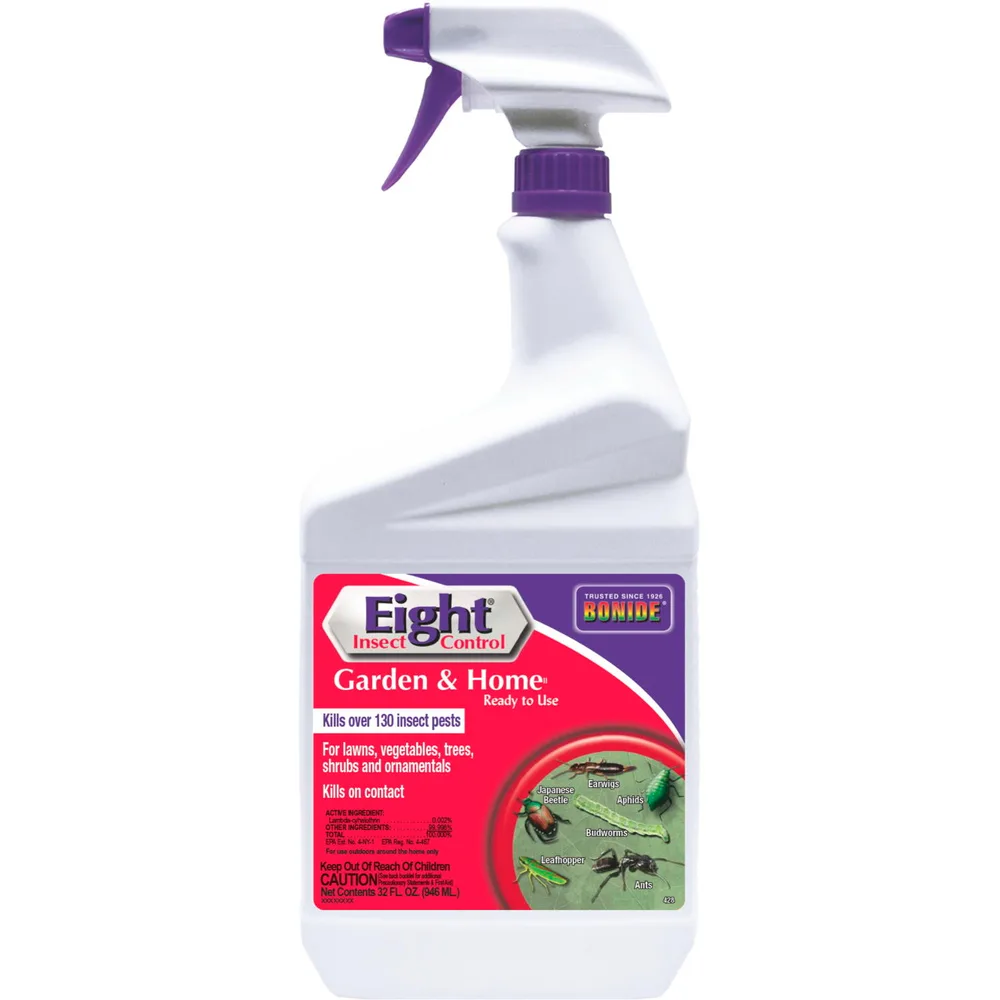
Bonide Eight is a ready-to-use lambda-cyhalothrin spray with 0.002% in the locked record. The recorded sites are outdoor lawn or garden sites, plus ornamentals listed on the label. Its target list is the insects named on the current label.
For a lawn, the useful question is whether your insect and turf site appear together on the current package label. Check the Bonide product page, Bonide label, and EPA record.
Pros: Ready-to-use outdoor format; lawn and ornamental scope; active ingredient is recorded.
Cons: Target and site pairing needs a label check; runoff and re-entry directions remain.
Check Bonide Eight Garden & Home
6. Monterey Garden Insect Spray
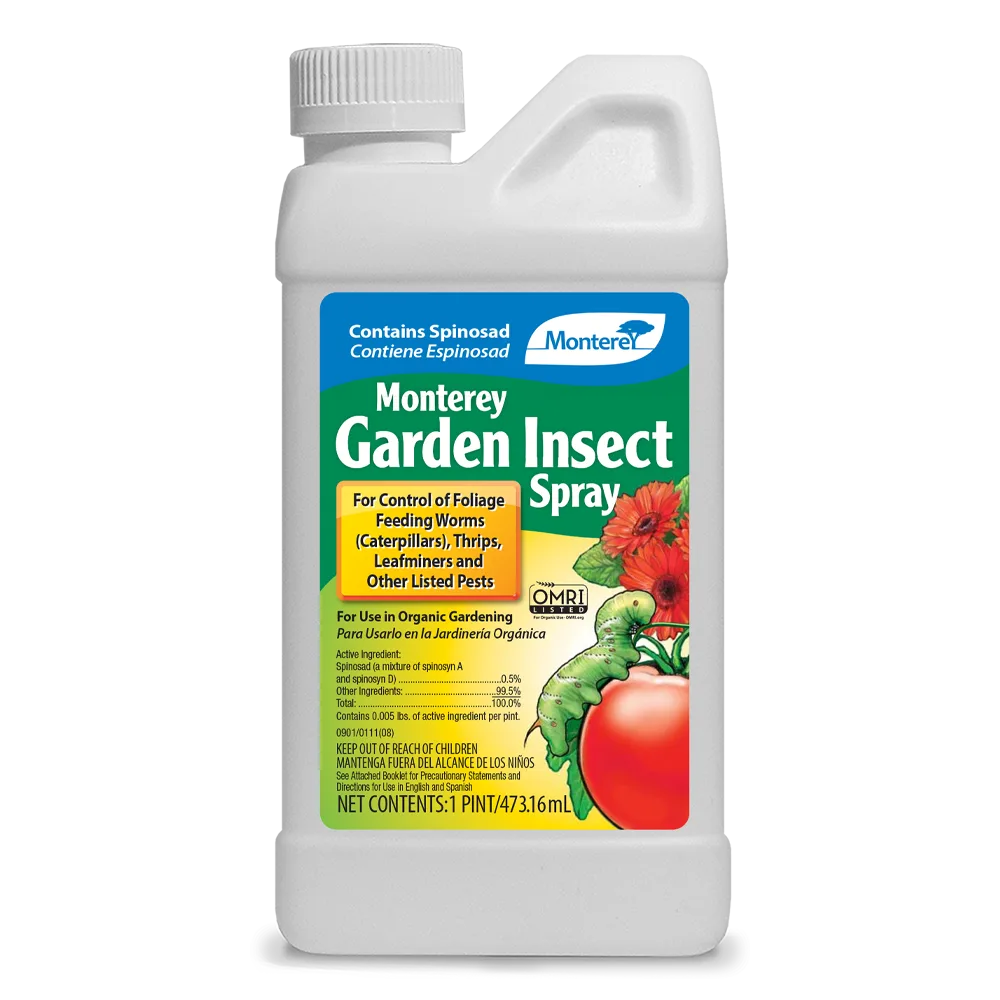
Monterey Garden Insect Spray is a concentrate for label-directed dilution. The locked record lists spinosad at 0.50%, with pests named on the current label and outdoor residential gardens, lawns, ornamentals, and greenhouse sites in the recorded scope.
The concentrate format moves the decision into dilution and application. Use the Monterey product page and current label for the exact lawn use. Do not transfer a crop rate to turf.
Pros: Concentrate for several labeled outdoor sites; spinosad amount is documented; lawn is in the recorded site set.
Cons: Dilution and application require label reading; crop and pollinator directions are not interchangeable with lawn directions.
Check Monterey Garden Insect Spray concentrate
7. Monterey Garden Insect Spray Ready-to-Use
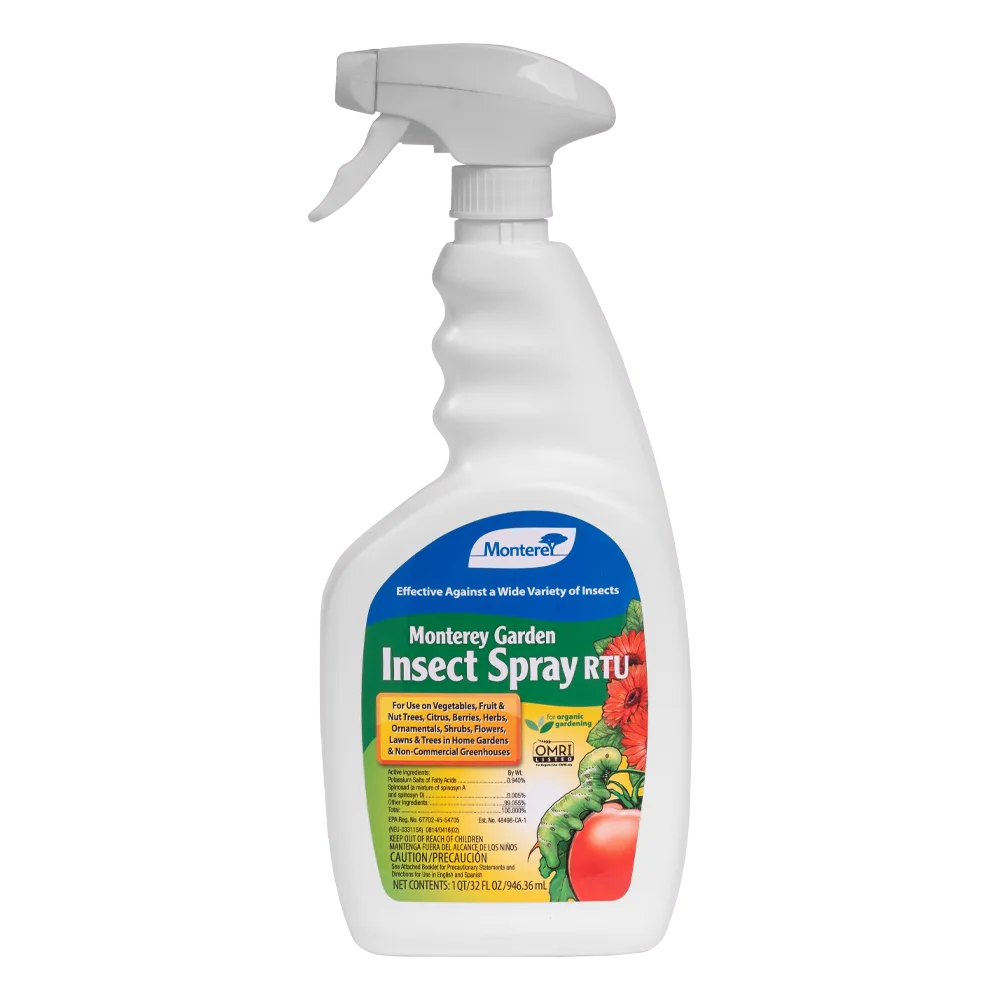
Monterey RTU is the ready-to-use counterpart for outdoor residential home gardens, lawns, ornamentals, and greenhouse sites listed in the locked record. It lists potassium salts of fatty acids at 0.940% and spinosad at 0.005%, with pests and crops named on the current product label.
Use the Monterey RTU product page and current RTU label to check the exact lawn target, crop, drying, and re-entry instructions.
Pros: Ready-to-use outdoor format; lawn and garden sites are recorded; active ingredients are listed.
Cons: Site and crop directions are specific; it is not a universal lawn spray.
Check Monterey Garden Insect Spray RTU
Buying criteria for lawn products
Start with the insect and turf site. The current label must name the target and the lawn or landscape site together. Do not substitute a garden-crop direction for a turf direction. The same active ingredient can appear in products with different allowed uses.
Choose hose-end, granule, ready-to-use, or concentrate based on the area and the directions you can follow. Hose-end and granule products still need drift, runoff, watering, drying, and re-entry attention. Concentrates add exact dilution instructions. A small ready-to-use bottle may fit a defined area, but the locked research does not support coverage promises.
Check weather, water, and people or pet access only through the label. Do not invent a waiting period. University of Minnesota Extension’s yard and garden insect guidance is useful for identification and IPM context. For water and garden equipment, compare the large-garden hose guide after checking that separate product decision.
For the garden areas next to treated grass, see the garden pest-control guide and lawn irrigation guide.
Frequently asked questions
What is the best pest control for a lawn?
Ortho Lawn & Landscape Ready-to-Spray is the strongest hose-end fit in this pool. Ortho Home Defense Granules is the clearer granule choice. The target insect and current lawn label still decide whether either belongs on your turf.
Should I use spray or granules on grass?
The format depends on the site, area, equipment, and label directions you can follow. Spray brings drift and runoff questions. Granules bring broadcast and watering directions. Neither format is a control promise.
Can I use a garden insecticide on my lawn?
Only when the current label names the lawn site and target. Monterey and Bonide products have multiple outdoor sites, but garden-crop instructions cannot be transferred to turf.
How long should people and pets stay off treated grass?
Use the current product label. The locked research does not provide one interval for seven different products.
Recommendation
Pick Ortho Lawn & Landscape Ready-to-Spray for a label-matched hose-end lawn job, or Ortho Granules when granules fit your equipment and current directions. Amdro is worth checking after its active percentage and label are confirmed. Use Bonide and Monterey only where their lawn-specific target and site wording fit.
Sources and methodology
She Gardens used the locked pest-control shortlist and source registry researched on 29 August 2026. Product facts came from the manufacturer and EPA links attached to each pick. Independent context came from University of Minnesota Extension, Penn State Extension, and the large-garden hose guide. She Gardens did not test these products. Check the current label, registration, package, and state rules before use.