
Buying guide
Best composters for a small garden: 7 compact options compared
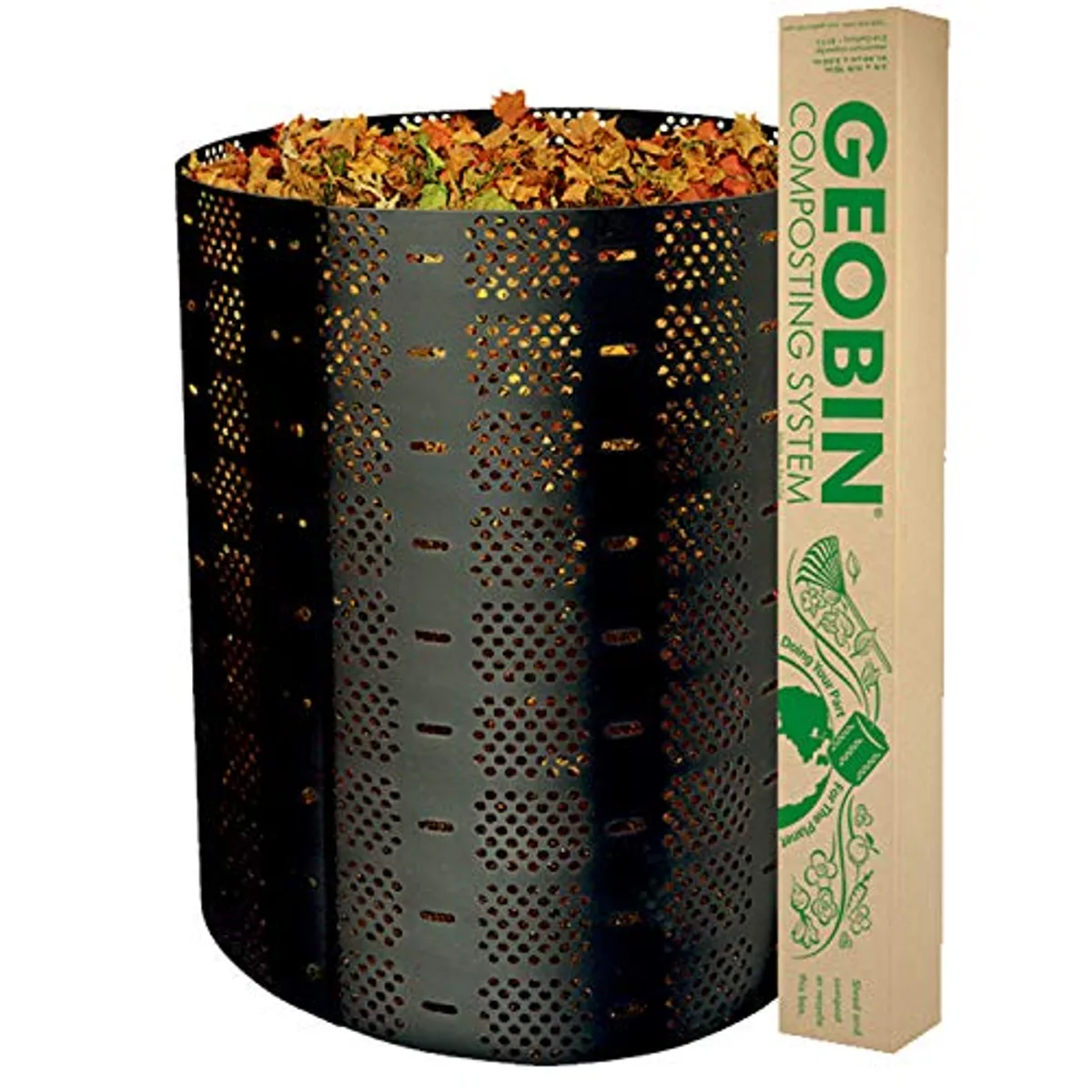
GEOBIN is the best small-garden pick when you can use its expandable capacity outdoors. Envirocycle is easier to treat as a compact tumbler, while Bokashi and the FCMP worm bin fit the shortlist when indoor footprint matters more than garden-volume processing.
Quick answer
Small gardens need a composter that fits the site without creating a second problem. GEOBIN ranks first because its expandable outdoor format gives a small garden room to handle leaves and trimmings when the location can accommodate it. Envirocycle Classic is the more contained tumbler choice. FCMP IM4000 earns third place when two chambers and batch separation are worth more than the smallest footprint.
Bokashi Living One and the FCMP two-tray worm bin belong here for different reasons. They can fit an indoor or sheltered setup, but they do not turn into finished compost in the same way as an outdoor aerobic bin. Bokashi ferments material and needs a second soil or curing step. A worm bin needs bedding, live worms, moisture, and controlled feeding. She Gardens did not test these products or treat compact size as a promise of fast composting.
| Rank | Product | Best fit | Main drawback |
|---|---|---|---|
| 1 | GEOBIN Composter 246 Gallon | Expandable outdoor capacity | Needs outdoor space and pest management |
| 2 | Envirocycle Composting Tumbler | Compact contained turning | Liquid needs management |
| 3 | FCMP Outdoor IM4000 Tumbling Composter | Two garden batches | Larger than a small single chamber |
| 4 | Bokashi Living One Starter Kit | Small indoor fermentation | Requires bran and follow-on curing |
| 5 | FCMP Outdoor Essential Living Composter, 2-Tray | Compact worm castings | Needs live worms and moisture control |
| 6 | Lifetime Rotating Composter 80 Gallon (60058) | Larger enclosed batch | Needs more space than its name suggests |
| 7 | HOTBIN Mini | Active composting in limited outdoor space | Heat and input balance matter |
The seven small-garden picks
1. GEOBIN Composter 246 Gallon
GEOBIN sounds oversized for a small garden, but its expandable format is why it leads this list. The manufacturer lists the 246-gallon model on its official site. You can use the capacity when leaf season arrives, then judge whether the footprint works for your particular yard.
This is an outdoor static bin, not a sealed kitchen machine. It needs regular mixing, moisture management, browns and greens, and a location that can tolerate more pest attention than an enclosed tumbler. Measure the site with the bin loaded in mind, and leave access for adding material and removing compost.
Pros: Few parts and expandable capacity. Cons: It needs outdoor room and does not block every pest.
2. Envirocycle Composting Tumbler
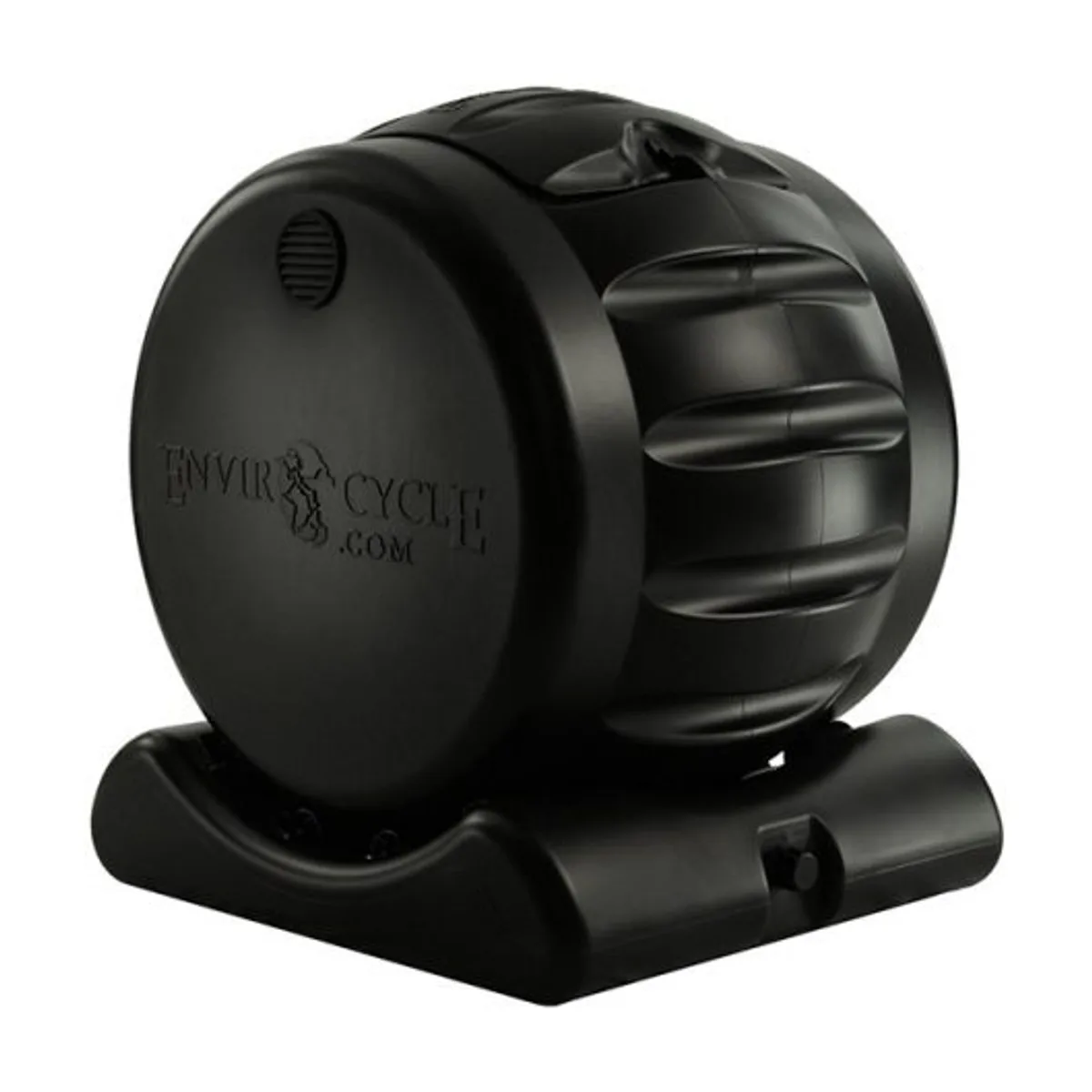
Envirocycle Classic is the tidy tumbler choice for a small garden. The manufacturer describes a rotating aerobic unit with liquid collection on its current site. Turning keeps the handling method clear, and the compact form may be easier to place than a large static bin.
The liquid collection feature adds a job. Manage it according to the current directions and do not use it as fertilizer without evidence. Confirm the exact size in the current range, keep children and pets away from a moving unit, and remember that usable capacity is lower than many static bins.
Pros: Compact rotating format with liquid collection. Cons: Smaller usable capacity and added liquid handling.
3. FCMP Outdoor IM4000 Tumbling Composter
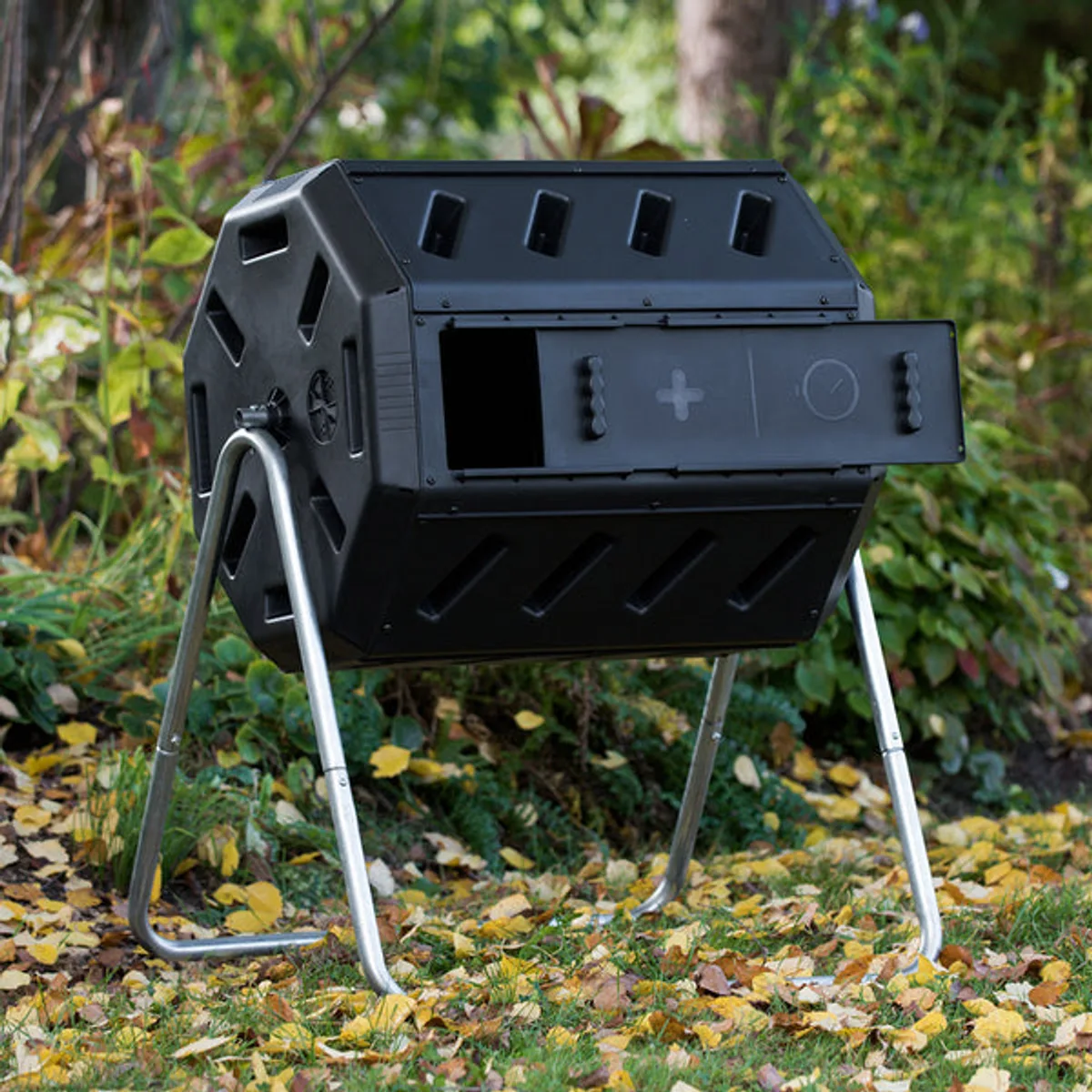
IM4000 suits a small garden that has two distinct batches, such as fresh kitchen scraps on one side and a resting batch on the other. FCMP lists the model in its composter collection. That separation can be useful when you want an active side and a side you leave alone.
It is still a fairly substantial object for a small yard. Check turning clearance, access to the chamber, and the route to your garden beds. Aerobic composting needs air, moisture, carbon-rich browns, and the input boundaries in the current instructions. Two chambers do not make the process automatic.
Pros: Two chambers and clear batch separation. Cons: It needs more turning and floor space than the smallest options.
4. Bokashi Living One Starter Kit
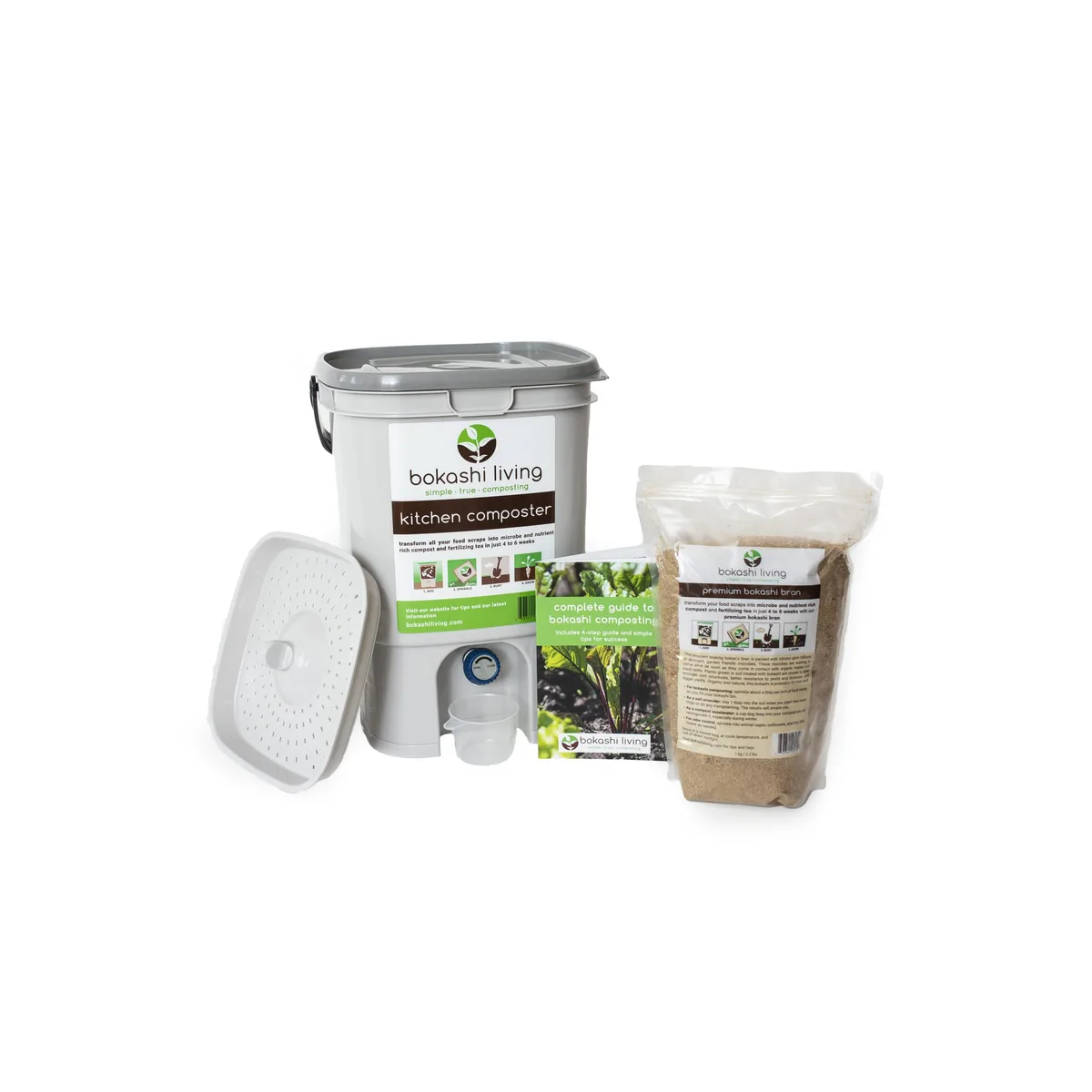
Bokashi Living One is the space-saving answer when the main material is kitchen food waste and you have a place for the next stage. The manufacturer provides the kit information, and Oregon State Extension gives useful context for fermentation and composting. The sealed bucket uses bran and creates fermented material rather than aerobic finished compost.
After the bucket stage, plan burial or follow-on curing. Manage the liquid, seal the bin as directed, and check current input rules before adding meat, dairy, or cooked food. The quiet footprint is useful in a small home, but it does not remove the need for outdoor soil or another compost step.
Check the Bokashi Living One kit
Pros: Small, quiet, and easy to keep indoors. Cons: Bran, leachate, and a second curing or soil stage are required.
5. FCMP Outdoor Essential Living Composter, 2-Tray
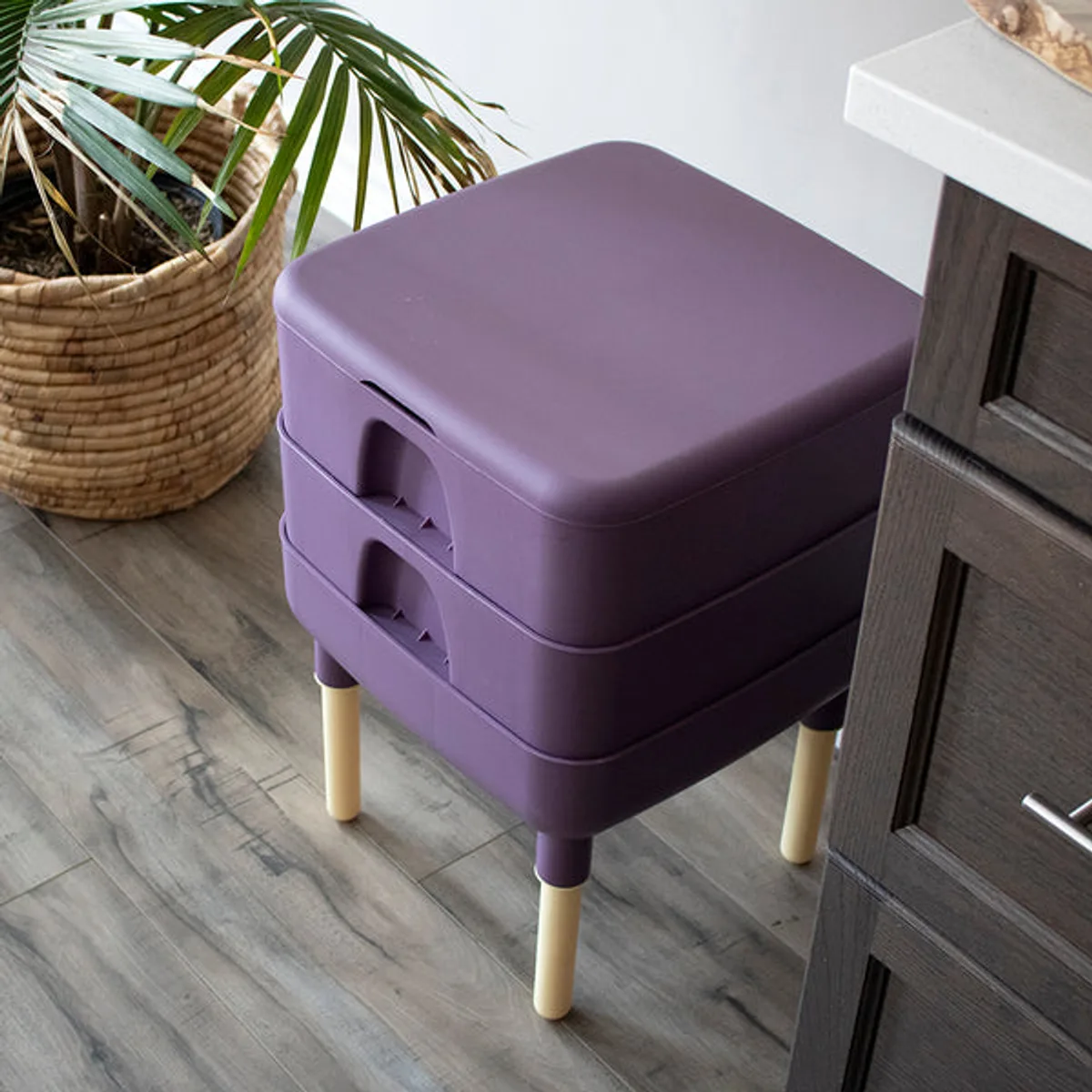
The FCMP Essential Living two-tray bin fits a small garden or sheltered indoor spot when you want worm castings and can care for live worms. FCMP lists the exact model on its product page. Oregon State Extension covers the bedding, moisture, and feeding needs that make vermicomposting work.
The bin does not accept every food scrap by default. Set up suitable bedding, control feeding, protect the worms from unsuitable temperatures, and treat any liquid carefully. This method has a small footprint, but it needs more daily awareness than an empty outdoor bin waiting for leaves.
Pros: Compact, motor-free route to worm castings. Cons: Live worms, bedding, moisture, and controlled feeding are part of the setup.
6. Lifetime Rotating Composter 80 Gallon (60058)
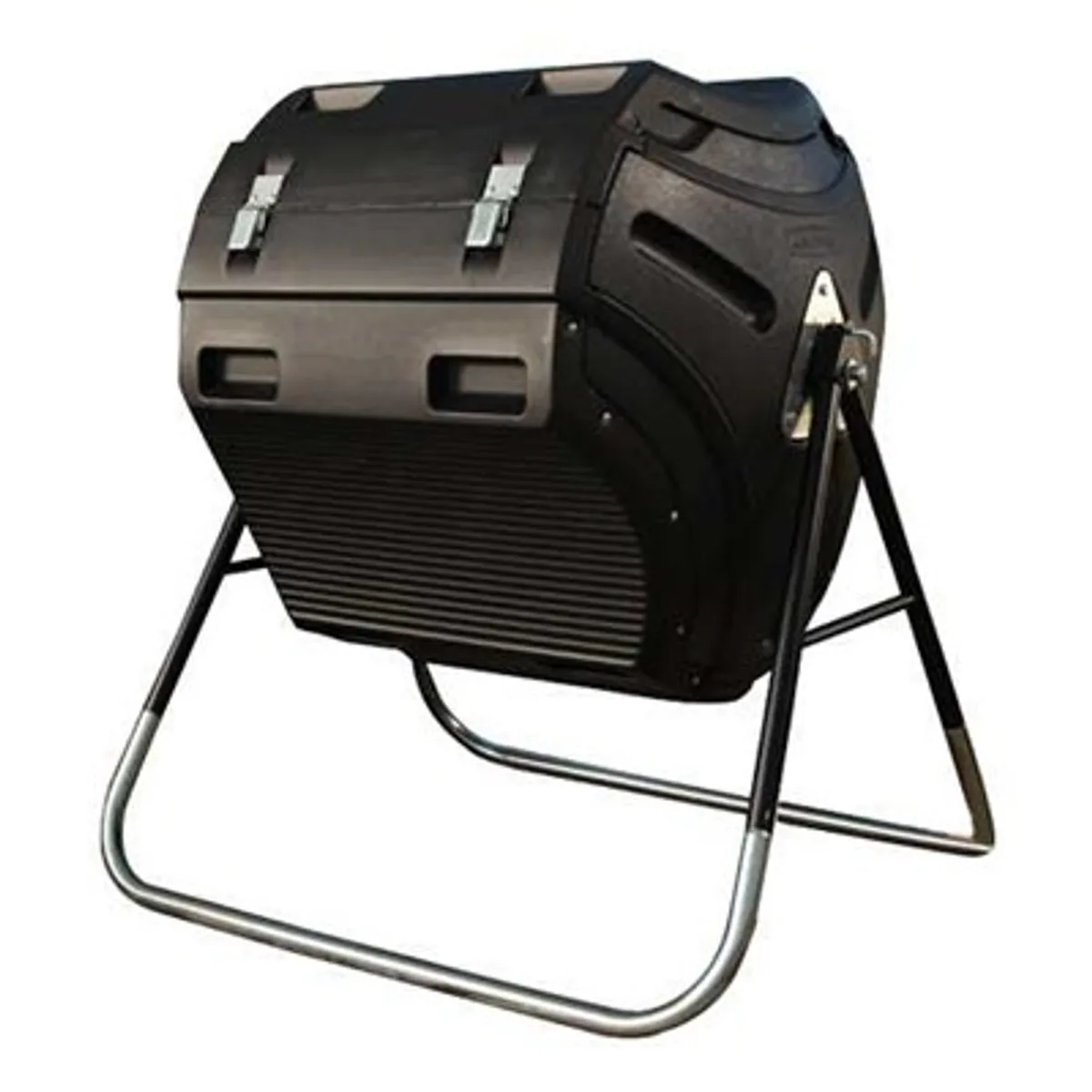
Lifetime 60058 is for the small garden that can spare a larger footprint for an enclosed rotating batch. The Lifetime product page identifies the 80-gallon model and its internal aeration bar. Keep the locking mechanism engaged when loading or unloading.
The 80-gallon name should be a measuring point, not a guarantee that it belongs in a narrow yard. Measure the base and turning clearance, then plan how you will harvest. Use the exact model instructions for inputs, moisture, and turning. A larger drum can still become difficult to handle when full.
Pros: Enclosed rotating batch with 80-gallon capacity. Cons: It needs more space and costs more than a basic bin.
7. HOTBIN Mini
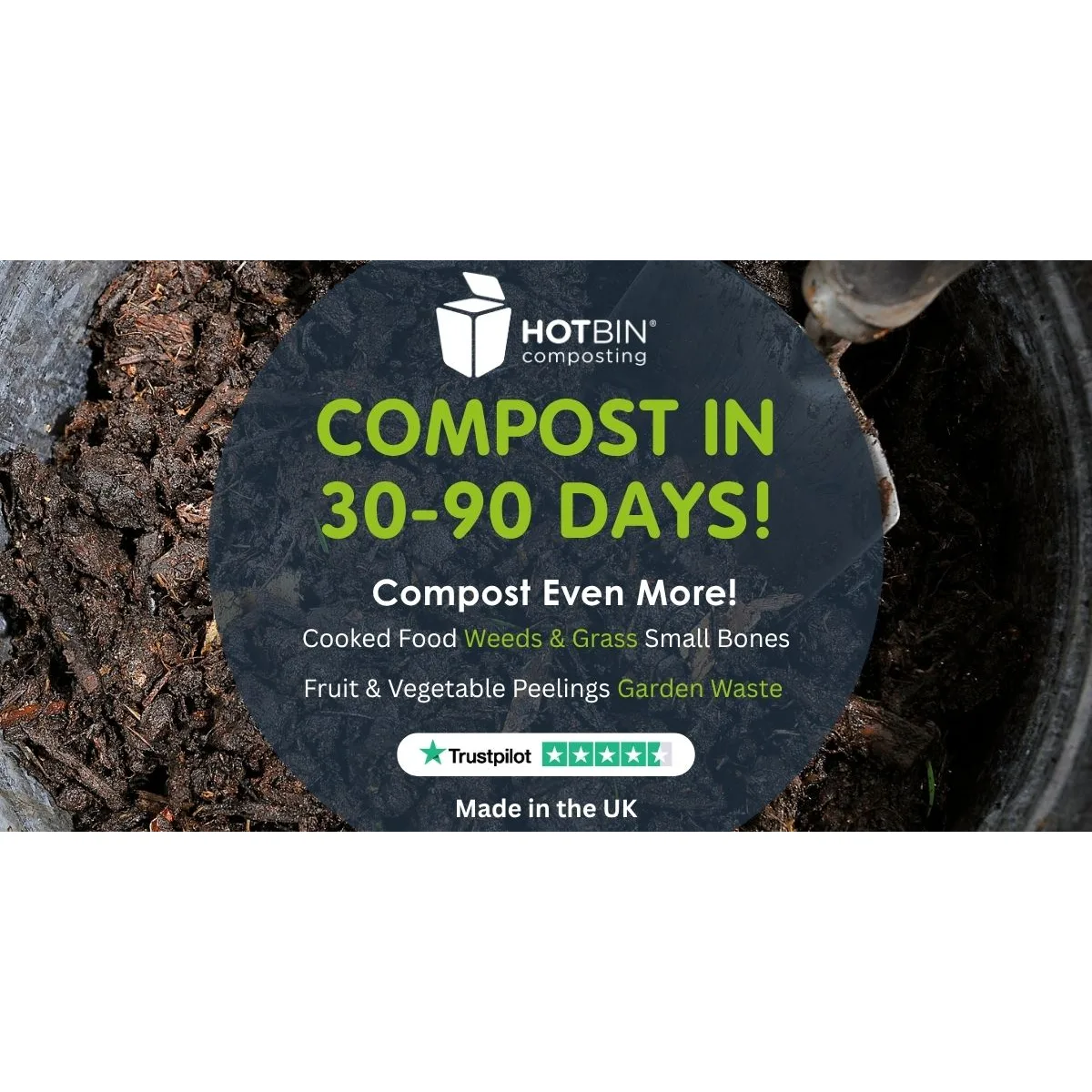
HOTBIN Mini is a compact hot-composting unit for a small garden with a ventilated outdoor or utility location. The HOTBIN site describes the insulated model and its food and garden input approach. Use the current ratio, moisture, clearance, and handling instructions.
Its compact footprint does not make it a cool, maintenance-free box. Hot material needs care, and the output may need curing before it is ready to use. Confirm the current US stock and placement requirements before buying. This is a garden system, not a plug-in kitchen recycler.
Pros: Insulated active composting in a compact outdoor unit. Cons: Heat, ventilation, moisture, and balance still need attention.
How to choose for a small garden
Measure the site before you compare product names. Include lid access, turning space, walking clearance, and the route to your beds. A 22-gallon tumbler or indoor bucket may fit a narrow patio, while GEOBIN and Lifetime need a real outdoor footprint. Small size does not mean fast processing. It means less material before the system fills.
Choose the method around your material. Leaves and trimmings suit outdoor aerobic systems. Kitchen scraps may suit Bokashi, a worm bin, or a food recycler, but each produces a different output. Electric recyclers dry and grind material. Bokashi ferments it. Worms produce castings. Hot bins and tumblers depend on an aerobic composting process.
The University of Minnesota Extension guide explains the role of air, moisture, and the input mix. Use it alongside the exact manual. Keep meat, dairy, pet waste, oily scraps, and diseased material out unless the current product and local rules specifically allow them.
If your small garden also needs a hose that fits tight storage, the small-space hose guide covers that separate purchase. It does not establish composter capacity or output.
A small compost setup may support a bed as well. The raised-bed compost guide and small-garden irrigation guide cover the next decisions.
Frequently asked questions
Does a small composter make compost faster?
No. Footprint and batch size do not set the finish time. Air, moisture, material balance, temperature, particle size, and handling all affect an aerobic pile or tumbler.
Is Bokashi a good option for a small garden?
It can be, if you have a place for burial or follow-on curing. Bokashi is an indoor fermentation method. Fermented material is not the same as finished aerobic compost.
Which small-garden option needs electricity?
HOTBIN Mini is an active insulated composter but is not a countertop electric recycler in this record. Bokashi, the FCMP worm bin, tumblers, and GEOBIN do not use an electric motor. Check the current product manual for the exact configuration.
Can an apartment balcony use an outdoor tumbler?
Only if the building, balcony, weight limits, drainage, and local rules allow it. The locked research excludes outdoor units from apartment use unless a permitted outdoor area exists. Confirm those limits before bringing one home.
Recommendation
Pick GEOBIN when your small garden can give an expandable outdoor bin a proper site. Choose Envirocycle for a contained tumbler, or IM4000 when two batches help your routine. Choose Bokashi or the FCMP worm bin when indoor footprint matters more than handling garden volume. Measure first. A small garden has little room for an unused composter.
Sources and methodology
This guide uses the locked composter product shortlist and source registry researched on 29 August 2026. Product facts came from GEOBIN, Envirocycle, FCMP Outdoor, Bokashi Living, Lifetime Products, and HOTBIN Composting. Method context came from Oregon State University Extension and the University of Minnesota Extension. She Gardens did not test these products or verify finish time, odor, price, or current availability. Check the current model, manual, site dimensions, and local rules before buying.