
Buying guide
Best composters for food waste: 7 systems for kitchen scraps
Reencle Prime is the strongest appliance-style pick for food waste in this locked pool. Bokashi Living One is the better low-power route when you can handle fermentation and curing, while FoodCycler FC-50 is a simple drying and grinding option with a clear output limitation.
Quick answer
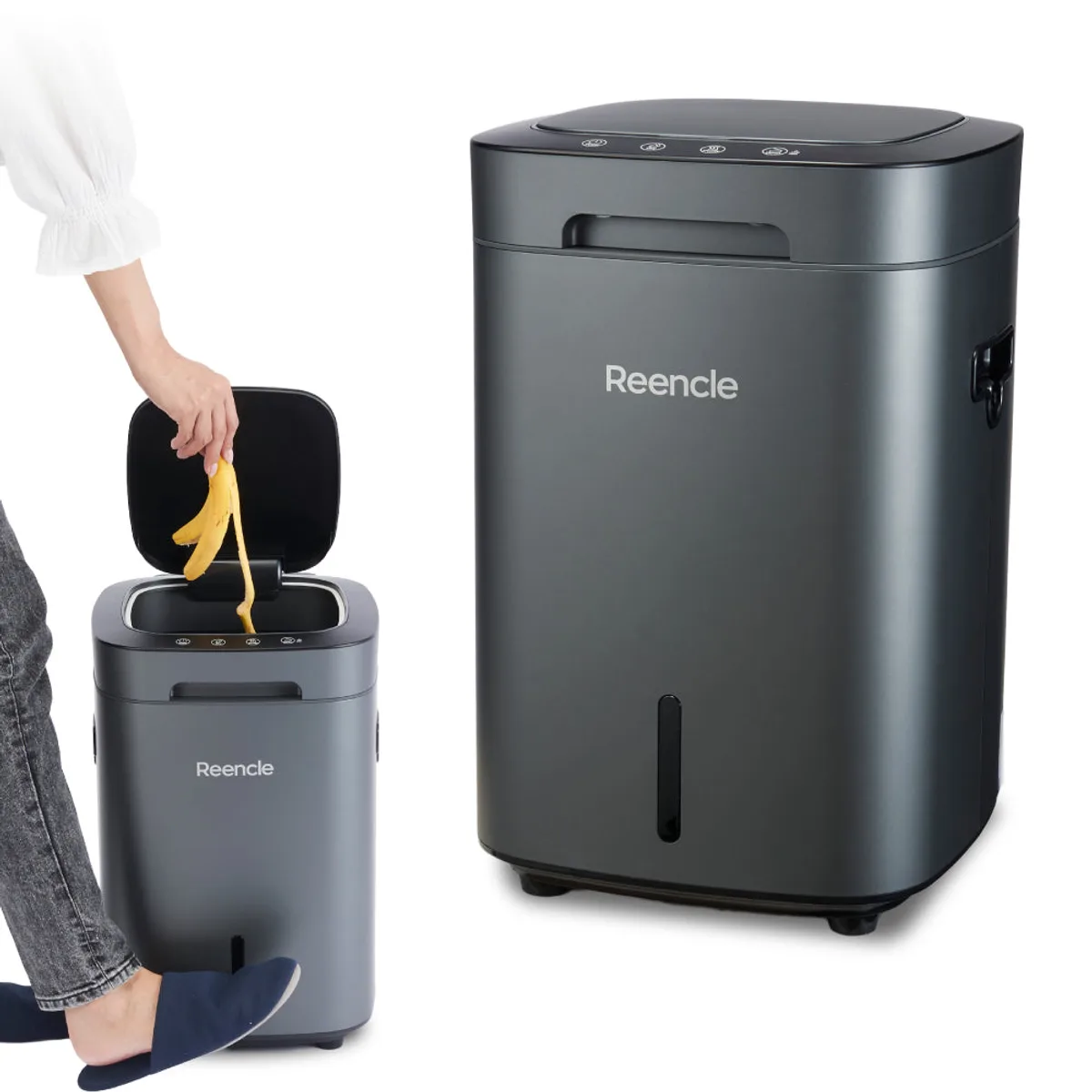
Reencle Prime is the best first look for food waste if you want an indoor appliance with microbial support and a filter. It also uses heat. Its ranking does not mean that it accepts every scrap, eliminates all odor, or creates safe finished compost without a second step. Check the current voltage, ventilation, filter, input, and output instructions.
Bokashi Living One ranks second because it handles the food-waste problem through sealed fermentation. It is quiet and compact, but fermented material normally needs burial or follow-on curing. FoodCycler FC-50 and Lomi 2 dry and grind scraps. They are food recyclers, not automatic finished-compost makers. Green Johanna, FCMP IM4000, and the FCMP worm bin take different paths through an outdoor or living composting process. She Gardens did not test any of them.
| Rank | Product | Best fit | Main drawback |
|---|---|---|---|
| 1 | Reencle Prime Food Waste Composter | Appliance-style food-waste processing | Needs electrical and consumable checks |
| 2 | Bokashi Living One Starter Kit | Quiet food-scrap fermentation | Requires bran and follow-on curing |
| 3 | Vitamix FoodCycler FC-50 | Drying and grinding scraps | Output is not automatically compost |
| 4 | Lomi 2 Food Recycler | Small countertop processing | Uses electricity and needs an output route |
| 5 | Green Johanna 330 L Compost Bin | Mixed kitchen and garden waste outdoors | Larger static footprint |
| 6 | FCMP Outdoor Essential Living Composter, 2-Tray | Selected scraps and worm castings | Needs worms and bedding, plus moisture care |
| 7 | FCMP Outdoor IM4000 Tumbling Composter | Food waste alongside garden material | Needs browns and air, with moisture and turning |
The seven food-waste picks
1. Reencle Prime Food Waste Composter
Reencle Prime is the leading appliance option because its manufacturer describes a bio and heat hybrid system with microbial support and a filter. That method sits between a simple food recycler and a conventional outdoor bin. Read the Reencle product page for current accepted-input and capacity details, filter care, and output directions.
Food waste is wet and varied, with oily scraps in the mix. Do not translate the word “food” into permission for every kitchen scrap. Confirm the current manual, use the 110V/60Hz US-compatible listing, and provide the ventilation space the manufacturer calls for. No locked source supports a blanket odor-free or pathogen-elimination claim.
Pros: Appliance-style processing with microbial support. Cons: Voltage, ventilation, filter, input, and output limits need a current check.
2. Bokashi Living One Starter Kit
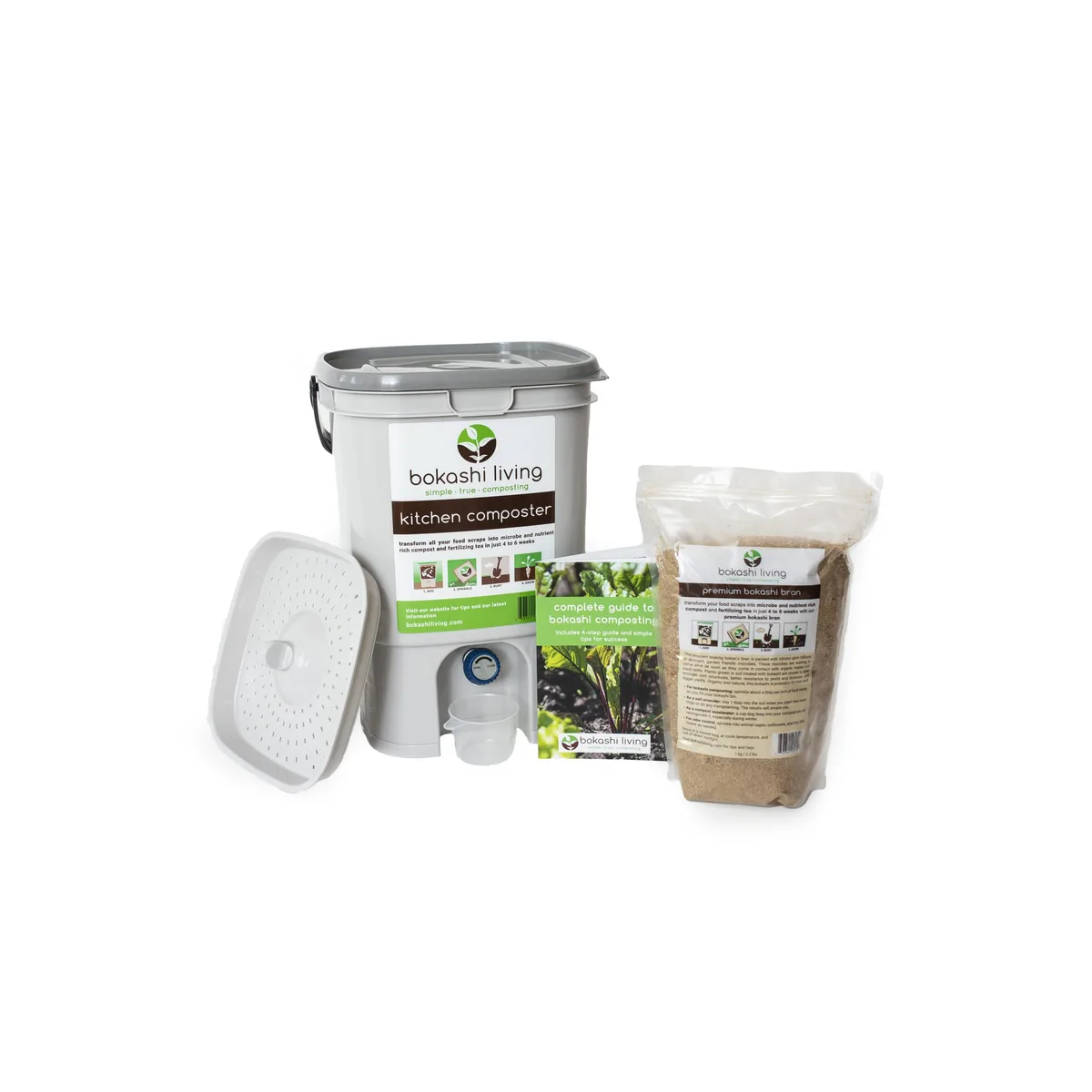
Bokashi Living One takes food waste through sealed fermentation. The manufacturer provides the kit information, while Oregon State University Extension and Kellogg’s indoor guide help place Bokashi beside other indoor methods. Add bran and manage the bucket as instructed.
Fermented food waste is not aerobic finished compost. It normally needs burial or a second curing step. Drain and handle leachate according to the current directions. Check meat and dairy or cooked-food rules before loading them, because the method and product instructions are not interchangeable.
Check the Bokashi Living One kit
Pros: Quiet and compact for mixed kitchen scraps where allowed. Cons: Bran, liquid handling, and a second soil or curing stage are part of the process.
3. Vitamix FoodCycler FC-50
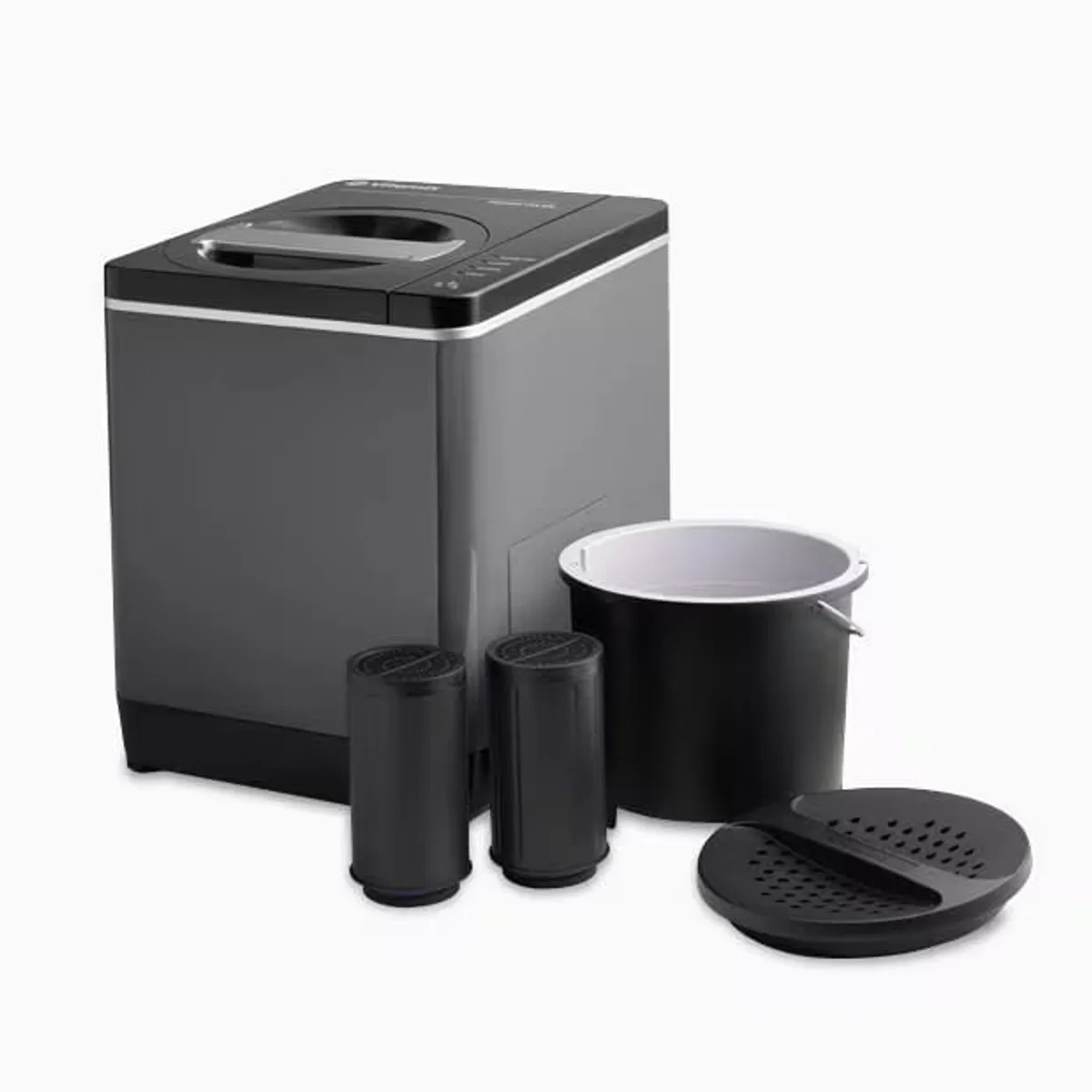
FoodCycler FC-50 is for the reader who wants to dry and grind food scraps indoors. Vitamix lists the exact unit on its manufacturer page. The current manual controls accepted inputs and safe operation, along with cleaning and output use.
Its output distinction matters more on a food-waste page than on a generic composter list. Dried and ground material is not automatically finished compost. Plan to move it into an appropriate soil or compost pathway, and leave clearance for heat and electrical use. Filter or maintenance needs add to the routine.
Pros: Direct countertop drying and grinding. Cons: Electricity and hot surfaces add work, as do maintenance and output handling.
4. Lomi 2 Food Recycler
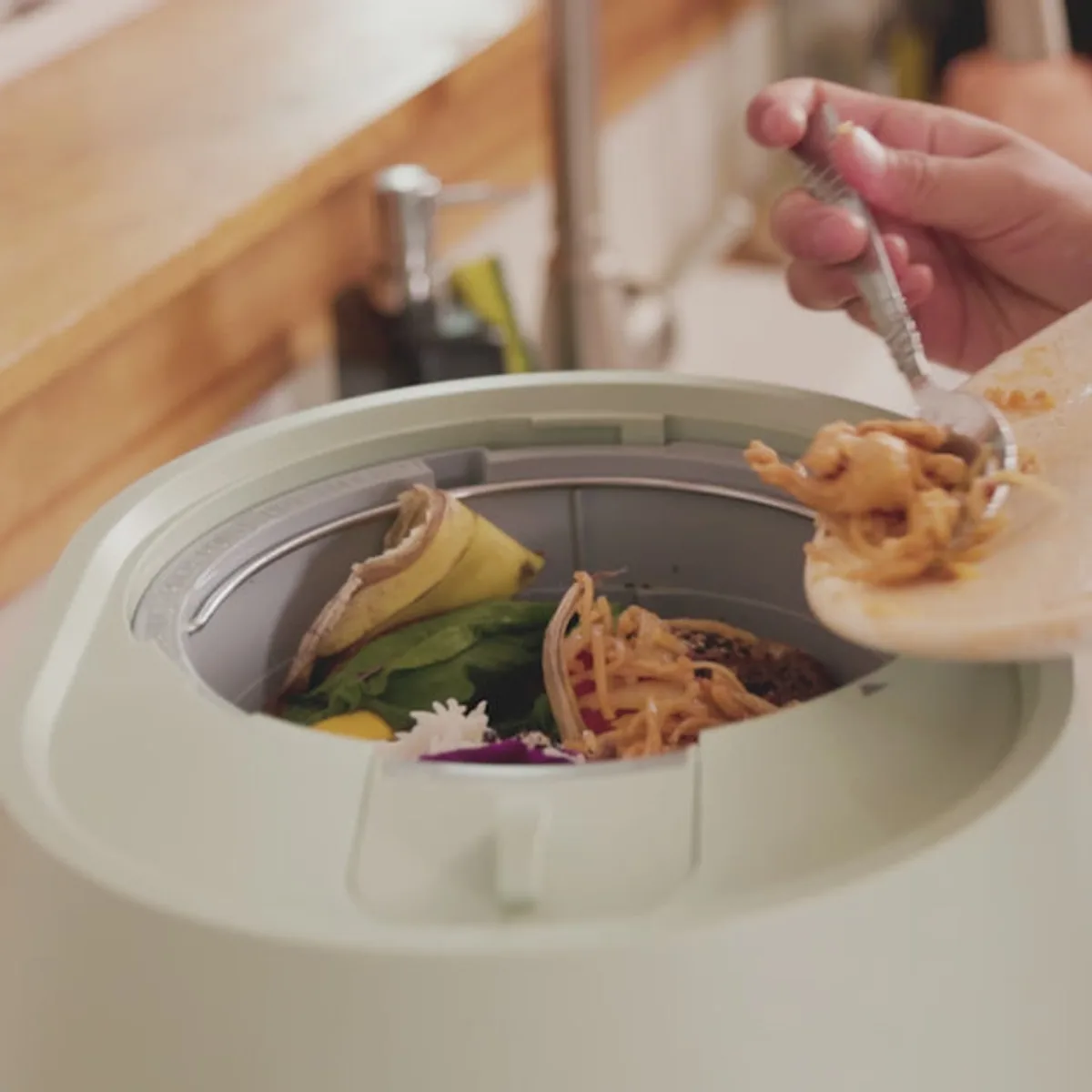
Lomi 2 uses electric heat and grinding to dry scraps according to the locked product record. The Lomi 2 page and current instructions should settle which modes and scraps apply to the unit you buy.
The compact counter format makes the waste routine easier to picture, but the processed material still needs a destination. Do not use the output as finished compost unless the current directions and a suitable soil or compost process support that use. Check ventilation and power, then confirm cleaning and regional availability before ordering.
Pros: Small countertop footprint and simple scrap processing. Cons: It uses electricity and does not remove the output-management step.
5. Green Johanna 330 L Compost Bin
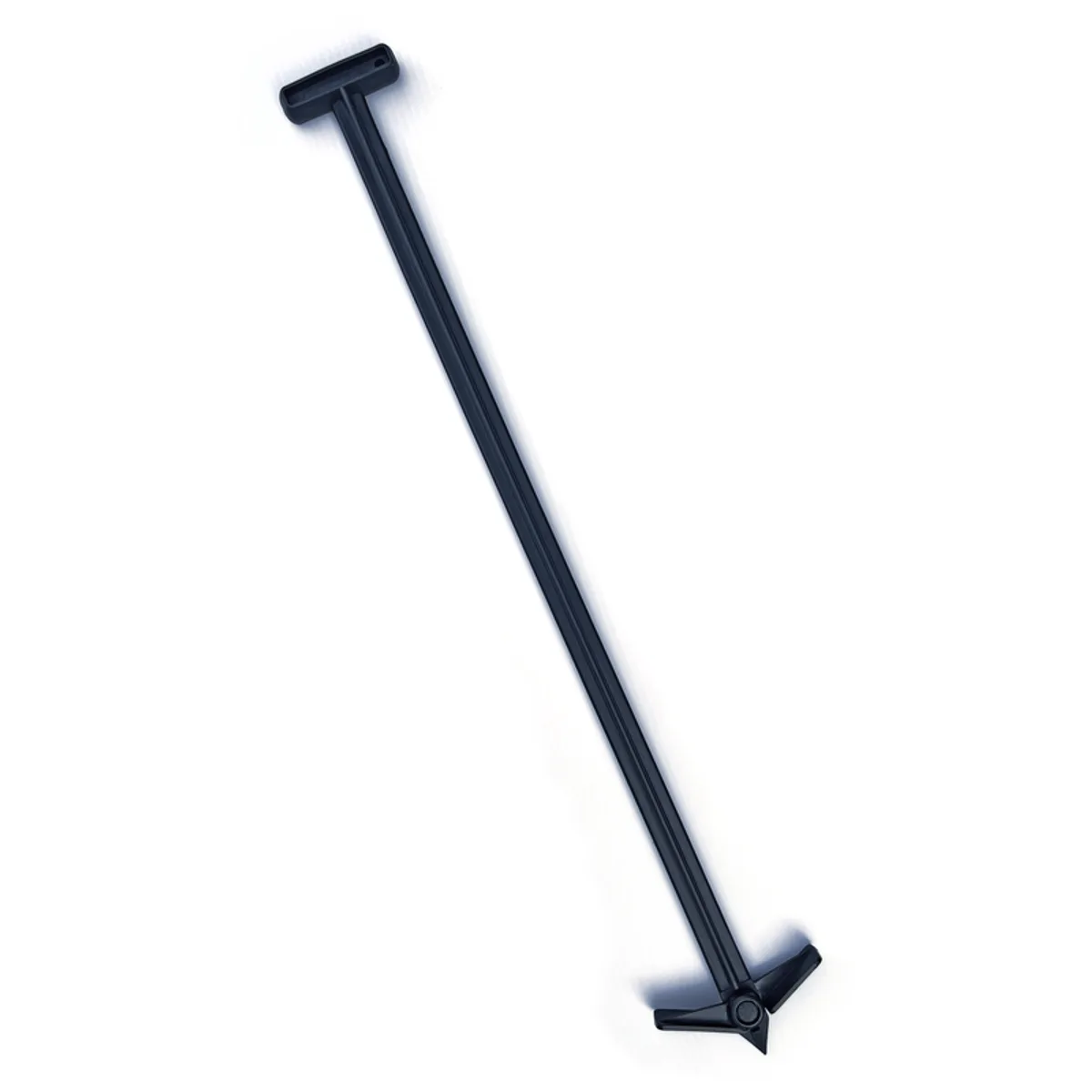
Green Johanna 330 L is the outdoor option for food waste that comes alongside garden material. The authorized US product page lists the 330-litre bin as an insulated static system for mixed kitchen and garden waste under current instructions.
It needs more room than a kitchen appliance and is less portable than a small tumbler. Fit the lid and base, plus the ventilation parts, correctly. Follow the current accepted-input rules rather than assuming the bin handles all cooked food, animal waste, or oily scraps. The output is part of an outdoor composting process, not an instant result.
Pros: Enclosed outdoor capacity for mixed material. Cons: Larger footprint and model-specific input rules.
6. FCMP Outdoor Essential Living Composter, 2-Tray
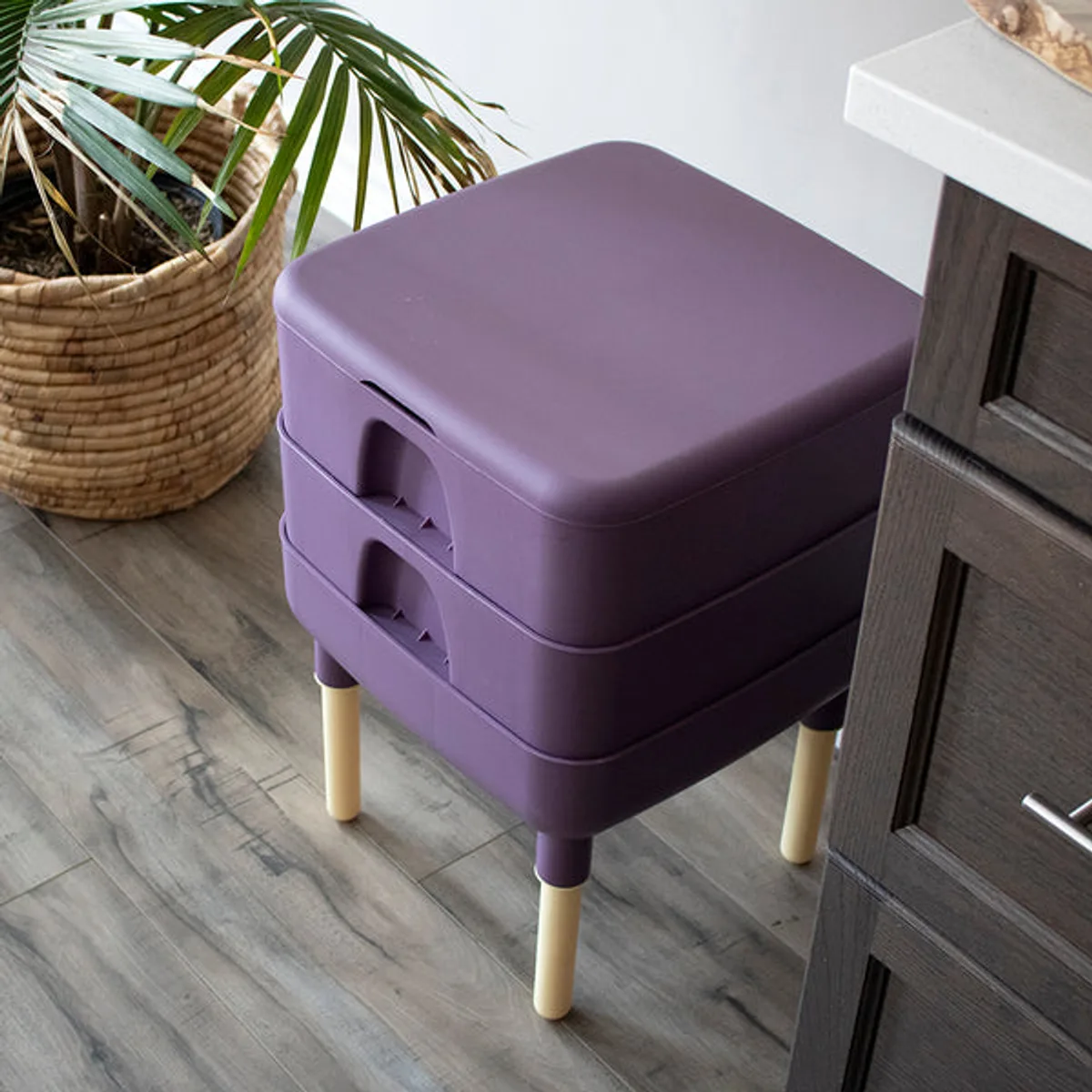
The FCMP two-tray worm bin handles selected food scraps through vermicomposting. FCMP lists it on its product page. Oregon State Extension provides the general guidance for bedding and moisture, followed by feeding.
The food-waste limit is a living one. Add suitable bedding, introduce composting worms, and feed controlled portions. The bin does not accept all scraps, and liquid from a worm bin is not automatically plant fertilizer. Choose it if you are willing to manage the conditions, not because the tray count promises large capacity.
Pros: Motor-free food-waste route to worm castings. Cons: Live worms and bedding are required, with careful moisture and feeding.
7. FCMP Outdoor IM4000 Tumbling Composter
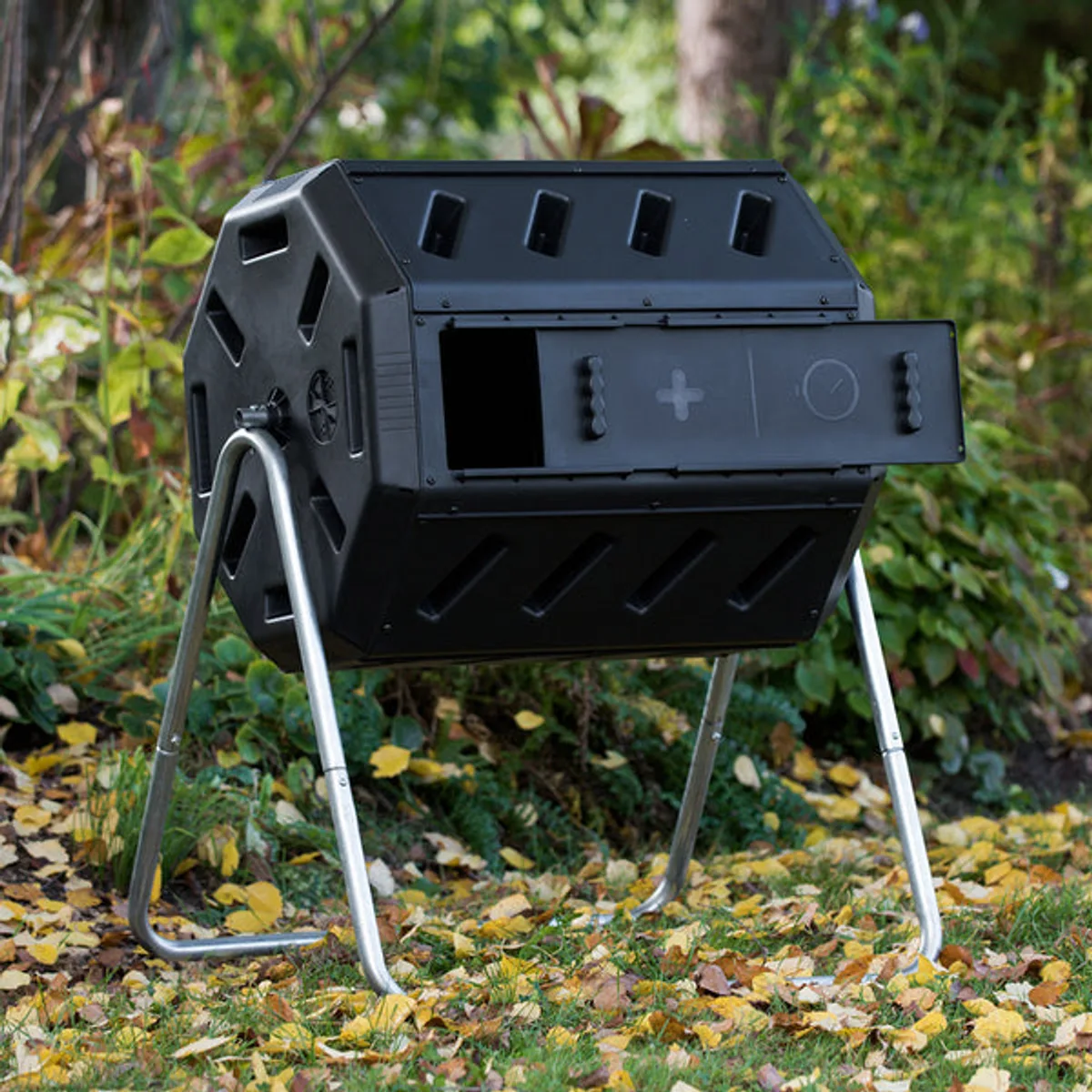
IM4000 makes sense when food scraps are only part of the garden stream. FCMP’s composter collection lists the dual-chamber tumbler. Put food waste into the mix allowed by the current instructions, add carbon-rich browns, and turn the chamber so air can reach the material.
The two chambers help separate batches, but the tumbler does not accept all food waste by default. Keep prohibited pet waste, diseased plants, or unsuitable scraps out. Capacity and moisture still set limits, as does turning effort, and the final material may need time before it is ready to use.
Pros: Two outdoor batches and room for food and garden inputs where allowed. Cons: It needs browns and air, plus moisture, turning, and outdoor space.
Choosing a food-waste system
Read the input list before the capacity line. Food waste can mean fruit and vegetable scraps, cooked leftovers, meat, dairy, oily food, or coffee grounds. The products in this guide do not share one accepted-input list. The EPA home composting guidance gives method context, but the exact manual and local collection rules control your purchase.
Then name the output. Reencle uses a bio and heat hybrid approach. Bokashi ferments material. FoodCycler FC-50 and Lomi 2 dry and grind it. A worm bin produces castings. Green Johanna and IM4000 depend on outdoor aerobic composting. Dried, fermented, warm, and partially processed material should not be marketed to yourself as finished compost without the needed follow-on step.
Indoor systems also have limits that a garden bin does not. Electrical models need the correct plug and voltage, plus ventilation and clearance. Heat management and cleaning matter too. Filters or bran create ongoing supply needs. A sealed Bokashi bucket is quiet, but it creates leachate and a second stage. A worm bin has no motor, but the worms need stable conditions.
Finally, decide where the result goes. If you have no garden, soil, municipal organics program, or service pathway, a machine alone does not solve the problem. Mill is absent from this food-waste ranking because this locked ranking favors the seven methods above. Confirm the current local disposal or return route before buying any food-waste appliance.
For using the finished material outdoors, compare the garden composter guide and raised-bed compost guide.
Frequently asked questions
Which food-waste system accepts the most scraps?
The locked research does not support a universal winner. Accepted inputs depend on the exact model and current instructions. Check meat, dairy, cooked food, oil, pet waste, and diseased plant material individually.
Is dried food waste the same as compost?
No. FoodCycler FC-50 and Lomi 2 produce dried and ground material. It is not automatically finished compost. Use the current directions and a suitable compost or soil pathway.
Does Bokashi make finished compost indoors?
No. Bokashi ferments food scraps. The fermented material normally needs burial or a follow-on curing or compost step.
Can I put a composter in a kitchen cabinet?
Do not assume that you can. Electric models need the clearance and ventilation in the current manual. Bokashi and worm systems have their own liquid, moisture, temperature, and access needs.
Recommendation
Choose Reencle Prime when appliance-style processing and microbial support fit your kitchen. Choose Bokashi for quiet fermentation with a clear second-stage plan. FoodCycler FC-50 and Lomi 2 suit drying and grinding, provided you already know where the output will go. For a garden, Green Johanna or IM4000 makes more sense when food scraps can join an outdoor aerobic process.
Sources and methodology
This guide uses the locked composter product shortlist and source registry researched on 29 August 2026. Product facts came from Reencle, Bokashi Living, Vitamix, Lomi, Green Johanna, and FCMP Outdoor. Method context came from the EPA, Oregon State University Extension, and Kellogg Garden Products. She Gardens did not test these products, verify current stock, or measure output, odor, emissions, or finish time. Check the current manual and local rules before buying.